You’ve heard it a thousand times: “carbs make you fat.” Your friend swears by a low-carb diet. Social media influencers claim carbs are the enemy. Yet, paradoxically, some of the healthiest, leanest people in the world eat plenty of carbs. So what’s the truth? To be direct, the answer is far more nuanced than the black-and-white messaging you’ve been receiving.
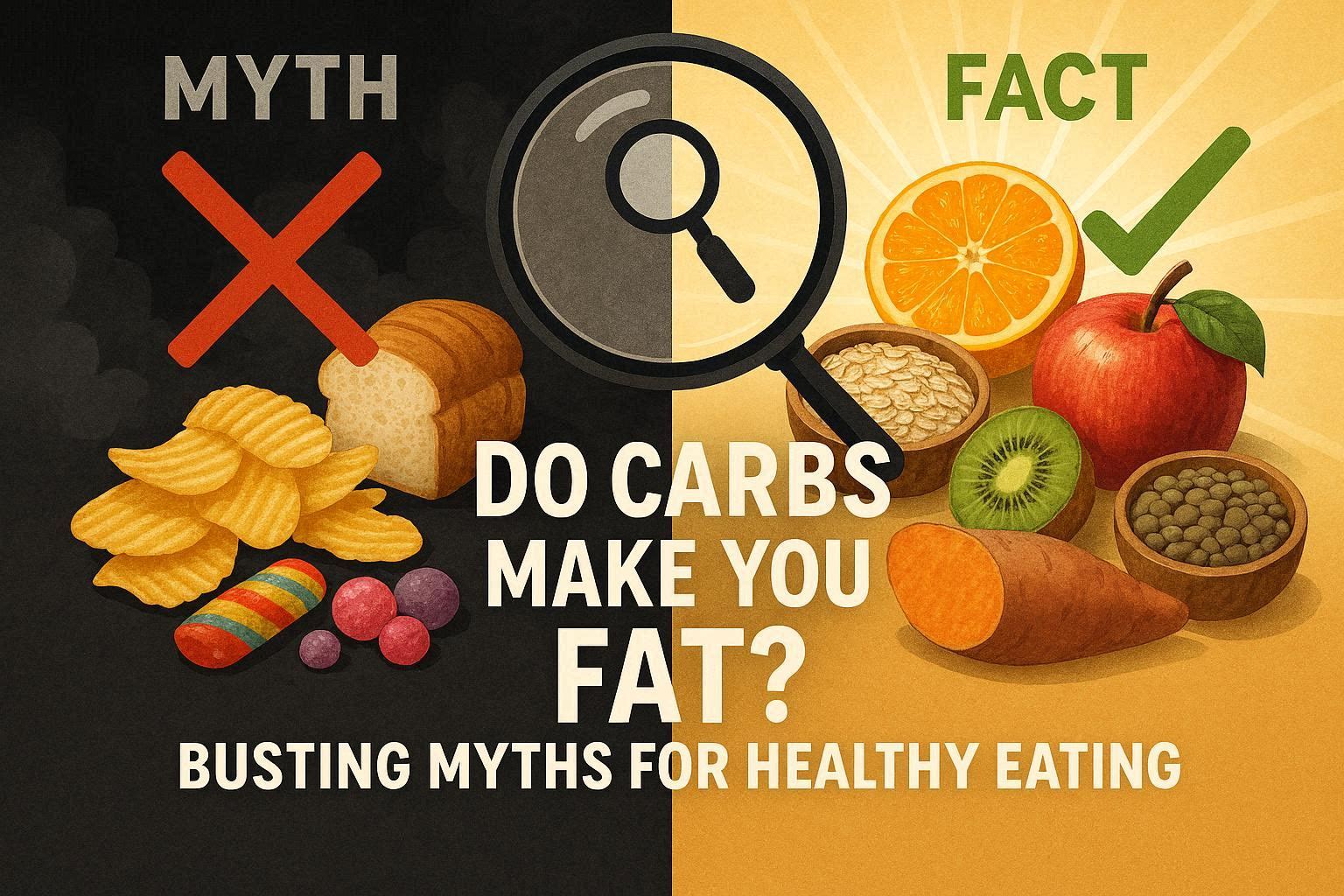
Here’s the short answer: No, carbs don’t inherently make you fat. However, eating too many carbs—or the wrong types of carbs—can contribute to weight gain. Moreover, the relationship between carbs and body composition is complex and depends on multiple factors.
In fact, understanding this distinction can revolutionize your approach to nutrition. Consequently, you’ll stop blaming carbs and start understanding what actually causes weight gain.
In this guide, we’re breaking down carb myths versus facts, explaining the science behind carbs and body composition, revealing what actually makes you gain fat, and providing practical tips for healthy eating that includes carbs.
Contents
- 1 The Carb Myth: Carbs Are Inherently Fattening
- 2 What Actually Makes You Gain Fat?
- 3 Carbs and Insulin: Separating Myth from Fact
- 4 Types of Carbs: Where the Real Distinction Matters
- 5 The Science: Do Carbs Make You Fat?
- 6 Why Some People Lose Weight on Low-Carb Diets
- 7 Real-World Example: Carbs and Body Composition
- 8 How to Eat Carbs Healthily
- 9 Common Carb Mistakes to Avoid
- 10 Comparison Chart: Carbs and Body Composition
- 11 Frequently Asked Questions (FAQ)
- 11.1 Q1: Do carbs convert directly to body fat?
- 11.2 Q2: Why did I lose weight fast on a low-carb diet?
- 11.3 Q3: Are all carbs bad?
- 11.4 Q4: Can I lose weight eating high carbs?
- 11.5 Q5: Does carb timing matter?
- 11.6 Q6: Are carbs necessary?
- 11.7 Q7: Should I count carbs or calories?
- 11.8 Q8: Do carbs before bed cause weight gain?
- 11.9 Q9: Can EATAI help me optimize carb intake?
- 11.10 Q10: Why do athletes eat so many carbs?
- 11.11 Q11: Can I eat carbs and lose fat?
- 11.12 Q12: What’s the best carb-to-protein-to-fat ratio?
- 11.13 Q13: Do sugar and complex carbs affect the body differently?
- 11.14 Q14: Should I fear carbs before workouts?
- 11.15 Q15: Can I eat unlimited carbs if they’re “healthy”?
- 12 Citations and Research References
- 13 Your Carb Strategy for Healthy Eating
- 14 Final Thoughts
The Carb Myth: Carbs Are Inherently Fattening
Let’s address the most persistent myth: carbs are inherently fattening. This is fundamentally false, and understanding why is crucial.
Why This Myth Exists
To understand this myth’s origin, we need to look at several converging factors. Specifically, the rise of low-carb diets (like Atkins in the 1990s) popularized carb-blaming. Furthermore, ketogenic diet communities claimed carbs trigger fat storage through insulin. Additionally, people noticed rapid initial weight loss on low-carb diets and assumed carbs were the problem.
However, the mechanism behind weight loss on low-carb diets has nothing to do with carbs being inherently fattening. Rather, it’s purely caloric. In other words, people eating fewer carbs naturally eat fewer overall calories, creating a deficit.
The Scientific Reality
Here’s what research actually shows: Carbohydrates have no special fat-storing properties. All nutrients that exceed your caloric needs are stored as fat. The source (carbs, fat, or protein) doesn’t matter for the basic physics of weight gain.
Notably, one gram of carbs has 4 calories. Comparatively, one gram of fat has 9 calories. Therefore, carbs are actually less calorie-dense than fat, making them easier to overeat on a per-calorie basis.
What Actually Makes You Gain Fat?
Before we discuss carbs, let’s clarify what actually causes fat gain. Understanding this foundation is essential.
The Simple Truth: Caloric Surplus
Fundamentally, fat gain happens when you consume more calories than your body burns. Conversely, fat loss happens when you consume fewer calories than you burn. This is basic thermodynamics—it applies regardless of macronutrient source.
The equation is simple:
- Calories in > Calories out = Fat gain
- Calories in < Calories out = Fat loss
- Calories in = Calories out = Weight maintenance
Importantly, this applies whether those calories come from carbs, fat, or protein. A calorie is a calorie in terms of energy balance.
Why Carbs Get Blamed
Carbs often get blamed because eating refined carbs (white bread, sugary foods, processed snacks) is an easy way to overeating calories. Specifically, these foods are:
- Calorie-dense – Pack lots of calories in small volumes
- Low in fiber – Don’t create fullness, so you eat more
- High in sugar – Trigger blood sugar spikes and crashes that increase hunger
- Easy to overeat – You can consume massive amounts without feeling full
Example: Eating 2,000 calories of refined carbs (cookies, donuts, soda) is easy. You’ll still be hungry afterward.
Eating 2,000 calories of whole food carbs (oats, brown rice, potatoes, fruit) is much harder. You’ll feel stuffed.
So carbs aren’t inherently fattening. Rather, certain types of carbs make it easy to overeat calories, which causes fat gain.
Carbs and Insulin: Separating Myth from Fact
Many low-carb advocates claim carbs cause insulin spikes that directly trigger fat storage. To clarify, this narrative is partially true but largely overstated.
What Insulin Actually Does
Firstly, insulin is a hormone your body needs. It’s not the enemy. Insulin’s job is to help your cells absorb glucose for energy. Furthermore, when you eat carbs, insulin levels rise to facilitate glucose absorption. Additionally, this is normal and necessary.
The Insulin-Fat Storage Claim
The claim: “Carbs spike insulin, which causes fat storage, which causes weight gain.”
The reality: Insulin only causes fat storage if you’re in a caloric surplus. In other words, if you’re eating more calories than you burn, insulin facilitates storage of those excess calories as fat. However, if you’re in a caloric deficit, insulin doesn’t prevent fat loss. The deficit still dominates.
What Studies Show
Research published in the American Journal of Clinical Nutrition found that weight loss is virtually identical whether you restrict carbs or fat—if calories are equal. The insulin response doesn’t create an advantage for low-carb diets once calories are controlled.
Therefore, insulin spiking isn’t the problem. Excessive caloric intake is the problem.
Types of Carbs: Where the Real Distinction Matters
Here’s where the carb conversation becomes meaningful: the type of carbs matters significantly for health and weight management.
Complex Carbs (The Good Ones)
Examples: Oats, brown rice, sweet potatoes, quinoa, whole grain bread, legumes, vegetables, fruits
Why they’re beneficial:
- High in fiber – Creates fullness, slows digestion, stabilizes blood sugar
- Nutrient-dense – Provide vitamins, minerals, and phytonutrients
- Lower glycemic index – Cause slower, steadier blood sugar rises
- Hard to overeat – Volume and fullness prevent excessive intake
Impact on fat gain: Minimal, even in large quantities, because they’re filling and nutrient-dense.
Refined/Simple Carbs (The Problematic Ones)
Examples: White bread, pastries, sugary cereals, candy, soda, cookies, cake, processed snacks
Why they’re problematic:
- Low in fiber – Doesn’t create fullness, encouraging overconsumption
- Nutrient-poor – Mostly empty calories with minimal nutrition
- High glycemic index – Cause rapid blood sugar spikes and crashes
- Easy to overeat – You can consume thousands of calories while still hungry
Impact on fat gain: High, because they encourage excessive caloric intake.
The Real Distinction
Importantly, this is where carbs get unfairly blamed. When people say “carbs make you fat,” they usually mean refined carbs make you fat. That’s somewhat accurate.
However, whole food carbs (complex carbs) actually support healthy weight management through satiety and nutrient density.
The Science: Do Carbs Make You Fat?
Let’s examine what research actually shows about carbs and body composition.
Study 1: Carb Restriction vs Balanced Diets
A landmark study in the New England Journal of Medicine (2009) compared:
- Low-fat diet (10% carbs)
- High-carb diet (65% carbs)
- Other variations
Result: All diets produced similar weight loss when calories were equal. Carb percentage didn’t matter—caloric deficit was the determining factor.
Conclusion: Carbs don’t inherently cause fat gain when calories are controlled.
Study 2: Whole Food Carbs vs Refined Carbs
Research in Nutrients (2020) compared people eating the same calories but different carb types:
- Group 1: Refined carbs (white bread, processed foods)
- Group 2: Whole food carbs (brown rice, oats, vegetables)
Result:
- Group 1: Lost 8 pounds, but experienced increased hunger and energy crashes
- Group 2: Lost 8 pounds, experienced better satiety and stable energy
Conclusion: Same weight loss, but carb quality dramatically affects adherence and quality of life.
Study 3: Carbs and Athletic Performance
A study in the Journal of Sports Sciences (2019) examined athletes on different carb intakes:
- Low-carb group: Reduced strength and power output
- Moderate-carb group: Maintained strength and power
- High-carb group: Maintained strength, improved power
Result: Carb intake affected performance but not fat loss (when calories were equal).
Conclusion: Carbs don’t cause fat gain, but they support athletic performance and muscle preservation during weight loss.
Why Some People Lose Weight on Low-Carb Diets
If carbs don’t cause fat gain, why do people lose weight quickly on low-carb diets? Understanding this is crucial for seeing through the marketing.
Reason 1: Water Weight Loss
Significantly, when you cut carbs, your body loses glycogen (stored carbs in muscles). Furthermore, glycogen stores water—about 3-4 grams of water per gram of glycogen.
Therefore, cutting carbs results in rapid water loss. Notably, this isn’t fat loss. Subsequently, when you add carbs back, water returns and the scale goes back up.
Reason 2: Appetite Suppression
Moreover, low-carb diets suppress appetite through several mechanisms:
- Ketone production – Ketones may suppress hunger hormones
- Protein and fat intake – Both are very satiating
- Simplicity – Fewer food choices reduce overeating temptation
Consequently, people naturally eat fewer calories on low-carb diets. However, this is not because carbs are fattening. Rather, the low-carb structure makes caloric restriction easier for these individuals.
Reason 3: Psychological Adherence
Additionally, some people find low-carb diets psychologically easier. Specifically, having clear rules (“don’t eat carbs”) is simpler than counting calories. Furthermore, the initial rapid results (water weight) provide motivation.
However, adherence differences vary by individual. Some people thrive on carbs and struggle on low-carb diets.
Real-World Example: Carbs and Body Composition
Let’s illustrate with concrete examples showing how carbs don’t inherently cause fat gain:
Person A: High-Carb Diet, Healthy Body Composition
Daily intake:
- Calories: 2,000
- Carbs: 300g (60% of calories)
- Protein: 150g (30% of calories)
- Fat: 45g (10% of calories)
Food examples:
- Breakfast: Oatmeal with fruit and egg whites (60g carbs)
- Lunch: Brown rice, chicken, vegetables (80g carbs)
- Snack: Apple and almonds (25g carbs)
- Dinner: Sweet potato, fish, broccoli (70g carbs)
- Other snacks: Vegetables, whole grains (65g carbs)
Result after 12 weeks: Lost 10 pounds of fat, maintained muscle, had consistent energy.
Carb intake didn’t cause fat gain because total calories were appropriate.
Person B: Low-Carb Diet, Healthy Body Composition
Daily intake:
- Calories: 2,000
- Carbs: 50g (10% of calories)
- Protein: 200g (40% of calories)
- Fat: 100g (50% of calories)
Food examples:
- Breakfast: Eggs and bacon (3g carbs)
- Lunch: Steak and salad (5g carbs)
- Snack: Cheese and nuts (6g carbs)
- Dinner: Fish, vegetables, olive oil (20g carbs)
- Other: Supplementary fats (16g carbs)
Result after 12 weeks: Lost 11 pounds of fat, maintained muscle, had stable energy.
Carb restriction didn’t cause superior fat loss because both people were in the same caloric deficit.
Person C: High-Calorie Refined Carbs
Daily intake:
- Calories: 2,800
- Carbs: 400g (mostly refined)
- Protein: 80g
- Fat: 75g
Food examples:
- Breakfast: Sugary cereal with milk (60g carbs)
- Lunch: Burger with fries (90g carbs)
- Snack: Soda and cookies (80g carbs)
- Dinner: Pasta with cream sauce (100g carbs)
- Other: Snacks, desserts (70g carbs)
Result after 12 weeks: Gained 8 pounds of fat, experienced constant hunger, had energy crashes.
Carbs caused fat gain because: (a) total calories exceeded burn, and (b) refined carbs encouraged overeating.
How to Eat Carbs Healthily
If carbs don’t inherently cause fat gain, how should you approach them? Here’s the practical framework:
Strategy 1: Choose Whole Food Carbs
Prioritize carbs that are minimally processed. Specifically:
- Grains: Brown rice, oats, quinoa, whole wheat bread, barley
- Vegetables: All vegetables, especially starchy ones like potatoes, corn
- Fruits: Fresh fruit of all types
- Legumes: Beans, lentils, chickpeas
Why: These provide fiber, nutrients, and satiety. Furthermore, they’re hard to overeat.
Strategy 2: Control Portion Size
Even whole food carbs contribute calories. Therefore, portion control matters. Specifically:
- Measure portions initially to understand amounts
- Use EATAI to track and learn
- Fill half your plate with vegetables, one quarter with carbs, one quarter with protein
Strategy 3: Pair Carbs with Protein and Fat
Combining carbs with protein and fat slows digestion and stabilizes blood sugar. For example:
- Don’t: Eat rice alone
- Do: Eat rice with chicken and olive oil
- Don’t: Eat bread alone
- Do: Eat bread with cheese or nut butter
- Don’t: Eat fruit alone
- Do: Eat fruit with nuts or Greek yogurt
Strategy 4: Time Carbs Strategically
While less important than total intake, timing provides benefits. Specifically:
- Around training: Eat carbs before and after workouts for energy and recovery
- With meals: Combine carbs with protein and fat for balanced nutrition
- Avoid isolated carbs: Don’t eat carbs alone, especially refined carbs
Strategy 5: Track with EATAI
Understanding your actual carb intake is powerful. Moreover, EATAI helps you:
- See how much carbs you’re actually eating
- Identify refined vs whole food carbs
- Track progress and adjust as needed
- Understand satiety patterns
Strategy 6: Listen to Your Body
Importantly, individual responses to carbs vary. Some people:
- Thrive on higher carbs (athletes, active people)
- Feel better on moderate carbs (average activity)
- Prefer lower carbs (sedentary individuals, sensitivity issues)
Therefore, experiment and find your optimal carb intake based on energy, hunger, and results.
Common Carb Mistakes to Avoid
Understanding what NOT to do is equally important:
Mistake 1: Cutting Carbs to Extreme Levels
Significantly, extremely low carb intake can cause:
- Reduced training performance
- Hormonal disruption
- Low energy and mood
- Unnecessary restriction
Therefore, carbs below 100g daily (unless therapeutic) are usually unnecessary for weight loss.
Mistake 2: Eating Only Refined Carbs
Moreover, relying solely on refined carbs causes:
- Constant hunger
- Energy crashes
- Nutrient deficiencies
- Easier overeating
Consequently, prioritizing whole foods makes weight loss effortless by comparison.
Mistake 3: Not Tracking Carbs or Calories
Additionally, without tracking, most people overestimate how much they’re eating. Therefore, logging with EATAIprovides crucial awareness.
Mistake 4: Blaming Carbs for Weight Gain
Significantly, blaming carbs while ignoring calories perpetuates the myth. Rather, excess calories (from any source) cause weight gain. Furthermore, understanding this shifts focus to the real problem.
Mistake 5: Assuming Low-Carb Equals Automatic Weight Loss
Notably, some people gain weight on low-carb diets because they overeat fat and protein calories. Therefore, carb restriction isn’t magical—calories still matter.
Comparison Chart: Carbs and Body Composition
| Factor | Refined Carbs | Whole Food Carbs | Carb Restriction |
|---|---|---|---|
| Satiety | Low | High | High |
| Nutrient Density | Low | High | Variable |
| Ease of Overeating | Very Easy | Hard | Moderate |
| Energy Level | Crashes | Stable | Variable |
| Fat Loss Speed | Slower (due to overeating) | Faster (due to satiety) | Similar (if calories equal) |
| Training Performance | Poor | Excellent | Moderate-Poor |
| Long-term Adherence | Low | High | Moderate |
| Sustainability | No | Yes | Moderate |
| Hormonal Health | Poor | Good | Variable |
| Cost | Low | Moderate | Moderate |
Key Insight: The carb source matters far more than the amount. Furthermore, whole food carbs support sustainable, healthy weight loss.
Frequently Asked Questions (FAQ)
Q1: Do carbs convert directly to body fat?
A: No. Your body preferentially uses carbs for energy before storing them as fat. Additionally, converting carbs to fat (de novo lipogenesis) is metabolically expensive and rare. Rather, excess calories (regardless of source) are stored as fat.
Q2: Why did I lose weight fast on a low-carb diet?
A: Primarily through water loss and appetite suppression leading to lower caloric intake. Furthermore, the initial rapid results are motivating but often reverse when carbs are reintroduced. Notably, actual fat loss may be similar to moderate-carb approaches if calories are equal.
Q3: Are all carbs bad?
A: Absolutely not. Whole food carbs are nutritious and support health. Moreover, refined carbs are problematic mainly because they encourage overeating calories. Importantly, the distinction between carb types is crucial.
Q4: Can I lose weight eating high carbs?
A: Yes, definitely. In fact, as long as total calories are below your needs, carb percentage doesn’t determine weight loss. Furthermore, some people lose weight faster on higher carbs due to better satiety and adherence.
Q5: Does carb timing matter?
A: Modestly. Eating carbs around training provides energy and recovery benefits. However, total daily carbs matter far more than timing. Therefore, don’t obsess over precise timing.
Q6: Are carbs necessary?
A: Not strictly necessary for survival, but beneficial for performance, satiety, and nutrient intake. Furthermore, moderate carbs (50-150g daily) support most people’s energy and health. Notably, completely eliminating them is unnecessary.
Q7: Should I count carbs or calories?
A: Counting calories is most important for weight loss. However, counting carbs (especially fiber and carb quality) supports satiety and nutrition. Therefore, ideally track both with EATAI.
Q8: Do carbs before bed cause weight gain?
A: No. Timing doesn’t matter. Whether you eat carbs at breakfast or bedtime, calories are calories. Furthermore, eating carbs before bed may actually improve sleep quality through serotonin production. Therefore, don’t fear nighttime carbs.
Q9: Can EATAI help me optimize carb intake?
A: Absolutely. EATAI tracks carbs automatically and shows quality (refined vs whole food). Furthermore, it helps you find your optimal carb amount based on your goals and activity. Notably, this removes guesswork.
Q10: Why do athletes eat so many carbs?
A: Because carbs fuel high-intensity exercise. Additionally, they support recovery and performance. Furthermore, athletes can afford higher carb intake due to high caloric burn from training. Therefore, carbs support their performance goals.
Q11: Can I eat carbs and lose fat?
A: Absolutely, yes. In fact, many people find weight loss easier on moderate-to-high carb diets due to satiety and training performance. Therefore, don’t eliminate carbs—optimize them.
Q12: What’s the best carb-to-protein-to-fat ratio?
A: No single ratio works for everyone. However, generally: 40-50% carbs, 25-35% protein, 20-35% fat works well. Importantly, your optimal ratio depends on activity, goals, and individual response. Therefore, experiment and track with EATAI.
Q13: Do sugar and complex carbs affect the body differently?
A: Yes and no. Both provide energy, but complex carbs provide fiber, nutrients, and stable blood sugar. Furthermore, sugar spikes blood sugar and hunger. Therefore, quality matters, but calories still determine weight loss.
Q14: Should I fear carbs before workouts?
A: No. Pre-workout carbs provide energy for better performance. Furthermore, this improved performance supports better muscle building and fat loss. Therefore, eating carbs before training is strategic, not problematic.
Q15: Can I eat unlimited carbs if they’re “healthy”?
A: No. Even healthy carbs provide calories that count toward your total. Therefore, portion control matters. However, whole food carbs make overeating harder due to satiety. Moreover, EATAI helps you track exact amounts.
Citations and Research References
The information in this blog is backed by peer-reviewed science:
Carbs and Weight Loss
- Sacks, F. M., Bray, G. A., Carey, V. J., et al. (2009). “Comparison of weight-loss diets with different compositions of fat, protein, and carbohydrates.” New England Journal of Medicine, 360(9), 859-873.
- Hall, K. D., Sacks, G., Chandramohan, D., et al. (2011). “Quantification of the effect of energy imbalance on bodyweight.” The Lancet, 378(9793), 826-837.
Refined vs Whole Food Carbs
- Venn, B. J., & Mann, J. I. (2004). “Cereal grains, legumes, and weight management.” Journal of the American College of Nutrition, 23(6), 604-612.
- Rolls, B. J. (2009). “The relationship between dietary energy density and energy intake.” Physiology & Behavior, 97(5), 609-615.
Insulin and Fat Storage
- Ludwig, D. S. (2002). “The glycemic index: Physiological mechanisms relating to obesity, diabetes, and cardiovascular disease.” Journal of the American College of Nutrition, 21(4), 303-308.
- Roberts, S. B. (2000). “High-glycemic index foods, hunger, and obesity.” Proceedings of the Nutrition Society, 59(3), 363-368.
Carbs and Athletic Performance
- Burke, L. M., Hawley, J. A., Wong, S. H., et al. (2011). “Carbohydrates for training and competition.” Journal of Sports Sciences, 29(1), 17-27.
- Ivy, J. L. (2004). “Dietary strategies to promote glycogen resynthesis after exercise.” International Journal of Sport Nutrition and Exercise Metabolism, 14(1), 83-92.
Satiety and Carb Quality
- Soenen, S., & Westerterp-Plantenga, M. S. (2008). “Proteins and satiety: Implications for weight management.” Current Opinion in Clinical Nutrition & Metabolic Care, 11(6), 747-751.
- Westerterp-Plantenga, M. S., Smeets, A. J., & Lejeune, M. P. (2005). “Sensory and gastrointestinal satiety effects of high-protein or high-carbohydrate meals in men.” International Journal of Obesity, 29(6), 676-683.
De Novo Lipogenesis
- Hellerstein, M. K., Schwarz, J. M., & Neese, R. A. (1996). “Regulation of hepatic de novo lipogenesis in humans.” Annual Review of Nutrition, 16, 523-557.
- Acheson, K. J., Flatt, J. P., & Jéquier, E. (1982). “Glycogen storage capacity and de novo lipogenesis during massive carbohydrate overfeeding in man.” American Journal of Clinical Nutrition, 48(2), 240-247.
Glycemic Index and Health
- Pi-Sunyer, F. X. (2002). “Glycemic index and disease.” American Journal of Clinical Nutrition, 76(Suppl 1), 290S-298S.
- Venn, B. J., & Brand-Miller, J. (2007). “Cereal grains and weight management.” British Journal of Nutrition, 99(1), 7-11.
Sustainable Weight Loss and Macros
- Wing, R. R., & Hill, J. O. (2001). “Successful weight loss maintenance.” Annual Review of Nutrition, 21, 323-341.
- Turk, M. W., Yang, K., Hravnak, M., et al. (2009). “Randomized clinical trials of weight loss maintenance: A review.” Journal of Cardiovascular Nursing, 24(1), 58-80.
Note: This information is for educational purposes. Consult a healthcare provider before making significant dietary changes, especially if you have health conditions or take medications.
Your Carb Strategy for Healthy Eating
To eat carbs while maintaining healthy body composition:
Step 1: Understand Your Needs Use EATAI to determine your caloric and carb targets based on your activity level and goals.
Step 2: Prioritize Whole Foods Focus 80%+ of carbs on whole food sources: oats, brown rice, potatoes, fruits, vegetables, legumes.
Step 3: Track Initially Log carbs with EATAI for 2-3 weeks to understand portion sizes and amounts.
Step 4: Combine with Protein and Fat Never eat carbs alone. Always pair with protein and healthy fats for balanced nutrition and satiety.
Step 5: Monitor Results Track weight, energy, and performance. Adjust carb amounts based on your individual response.
Step 6: Maintain Long-term Once you understand your optimal carb intake, EATAI helps you maintain consistency without obsessive tracking.
Final Thoughts
Here’s the definitive answer to the question that started this journey:
No, carbs don’t make you fat. Eating too many calories makes you fat. Furthermore, refined carbs make it easy to overeat calories. However, whole food carbs actually support healthy weight management through satiety, nutrition, and sustained energy.
The carb-blaming narrative is misleading and has caused unnecessary restriction and diet culture suffering. In reality, carbs are a valuable macronutrient that supports health, performance, and weight management when chosen wisely.
Therefore, embrace whole food carbs. Stop fearing them. Eat them strategically with protein and fat. Track your intake with EATAI. Watch your body transform while enjoying food and maintaining energy.
The healthiest, leanest people in the world eat carbs. So can you.
Start today. Choose whole food carbs. Create a moderate calorie deficit. Track with EATAI. Enjoy the process.
You’ve got this.