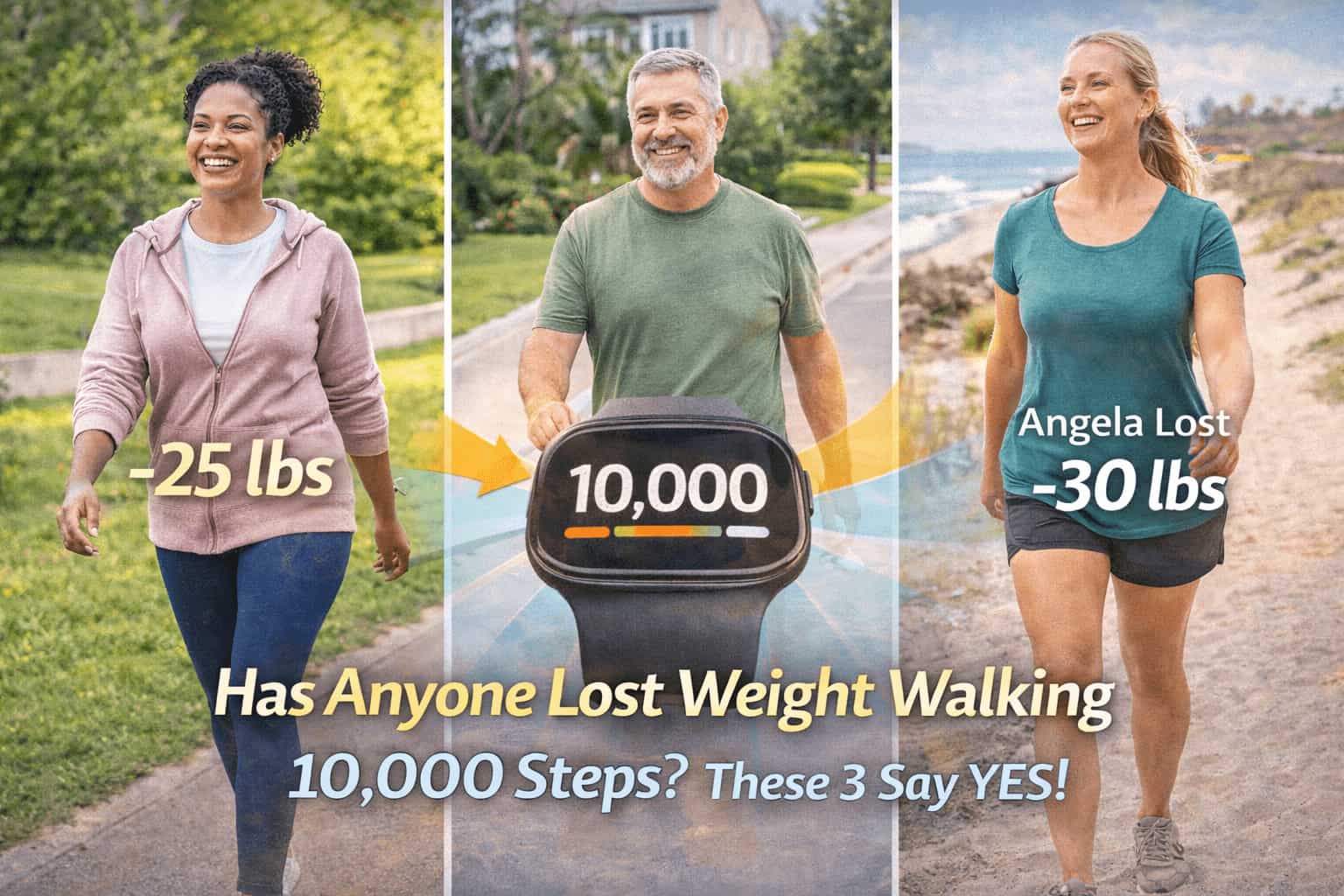
Lose Weight Walking 10,000 Steps a Day : The magic number of 10,000 steps a day has become synonymous with fitness goals and weight loss for millions of people worldwide. But is it actually effective? Or is it just another fitness myth? While the concept of walking 10,000 steps daily originated from a 1960s Japanese marketing campaign for a device called the 10,000-steps meter, where the number was chosen because the Japanese character for 10,000 resembles a person walking, the surprising truth is that yes, many people have successfully lost significant weight by committing to this daily walking goal.
In this article, we’ll explore the science behind walking for weight loss, and more importantly, we’ll meet three real people who have transformed their bodies and lives through the simple yet powerful act of walking 10,000 steps a day.
Contents
- 1 The Science: Can You Actually Lose Weight Walking 10,000 Steps?
- 2 Why Walking for Weight Loss Works
- 3 Success Story #1: Luz Arteaga – Lost Almost 6 Stone (84 Pounds)
- 4 Success Story #2: Alexandra I. – Lost 66 Pounds
- 5 Success Story #3: Christy’s “Hot Girl Walk” – 1-Year Transformation
- 6 Comparison Chart: The Three Success Stories
- 7 How to Start Your Own 10000 Steps Journey
- 8 Important Considerations (Lose Weight Walking 10000 Steps a Day)
- 9 Frequently Asked Questions (FAQ on Lose Weight Walking 10000 Steps a Day? )
- 9.1 Q: How long does it take to see weight loss results from walking 10000 steps?
- 9.2 Q: Can I lose weight walking 10,000 steps without changing my diet?
- 9.3 Q: Do I need to walk all 10,000 steps in one session?
- 9.4 Q: What if I can’t reach 10,000 steps due to physical limitations?
- 9.5 Q: What’s the best time of day to walk?
- 9.6 Q: Is brisk walking better than casual walking?
- 9.7 Q: How do I stay motivated to walk every day?
- 9.8 Q: Can walking help with weight loss if I have joint problems?
- 9.9 Q: Will I lose muscle by walking for weight loss?
- 9.10 Q: What’s the science behind the 10,000 number?
- 10 Frequently Asked Questions: Advanced Topics
- 11 The Bottom Line on Has Anyone Lost Weight Walking 10,000 Steps a Day?
- 12 References and Sources
The Science: Can You Actually Lose Weight Walking 10,000 Steps?
What the Research Shows
Research shows that increasing your daily steps can play a powerful role in both weight loss and overall health, and you might need fewer steps than you think. In fact, a 10,000 steps per day exercise prescription resulted in weight loss over 36 weeks in previously sedentary, overweight/obese adults, with adherence to the step goal having a marked effect on the outcome.
However, it’s important to note that there’s no single “magic number” for everyone. Most experts seem to agree that aiming for 7,000 to 10,000 steps a day is a realistic and effective goal for many adults, while walking fewer steps, around 5,000 to 7,000 daily, still provides major health benefits.
How Many Calories Do You Burn?
The number of calories burned while walking depends on several factors:
- Body Weight: Heavier individuals burn more calories
- Walking Speed: Brisk walking burns significantly more than casual strolling
- Duration: Longer walks accumulate more total calorie burn
- Terrain: Uphill walking increases calorie expenditure
- Age and Metabolism: Individual metabolic rates vary
On average, brisk walking burns more calories and improves heart health, even in short sessions, with speed and duration both mattering but in different ways.
The Calorie Deficit Connection
Weight loss fundamentally comes down to creating a calorie deficit—burning more calories than you consume. Walking 10,000 steps a day for an entire week usually can burn at least 1 pound of fat, making it an effective tool when combined with proper nutrition.
Why Walking for Weight Loss Works
1. It’s Sustainable
Unlike intense workouts that can lead to burnout, walking is something most people can sustain for the long term. It requires no special equipment, no gym membership, and can be done almost anywhere.
2. Low Impact
Walking is easier on your joints than running or high-impact exercises, making it suitable for people of all ages and fitness levels.
3. Builds Consistency
The low barrier to entry means you’re more likely to stick with it day after day, and consistency is key to weight loss success.
4. Improves Overall Health
Beyond weight loss, a study by the American Heart Association found that older adults who average about 4,500 steps each day cut their risk of serious heart problems by more than three-quarters compared to those who take under 2,000 steps.
5. Increases Daily Movement
Walking integrates movement into your daily routine rather than requiring dedicated workout time, making it easier to maintain long-term.
Success Story #1: Luz Arteaga – Lost Almost 6 Stone (84 Pounds)
The Starting Point
After a troubling family trip, Luz Arteaga decided to lose weight by following a low-carb diet, using a food scale, and walking at least 10,000 steps a day. Like many people, Luz had been unhappy with her weight for years but lacked the motivation to make lasting changes.
Her Approach
Luz took a multi-faceted approach to her weight loss:
- Daily Walking Goal: Committed to walking 10,000+ steps every single day
- Dietary Changes: Adopted a low-carb diet that focused on whole foods
- Accountability: Used a food scale to track portions accurately
- Consistency: Stuck with the plan day after day, week after week
The Results
Luz’s dedication paid off—she lost almost 6 stone (84 pounds) through this sustainable combination of walking and nutrition changes. More importantly, after years of hiding how miserable she was with her size, Luz made some manageable changes to her lifestyle that transformed not just her body, but her entire outlook on life.
Key Takeaway
Luz’s story demonstrates that weight loss isn’t about extreme measures or complicated programs. It’s about making manageable, sustainable changes—like committing to daily walks—and sticking with them over time.
Source: Women’s Health Magazine UK – Luz Arteaga’s Weight Loss Story
Success Story #2: Alexandra I. – Lost 66 Pounds
The Motivation
Alexandra I. lacked confidence in herself and felt deeply unhappy with her weight. She knew something had to change, but she wasn’t sure where to start. Rather than looking for a complicated solution, she decided to try a simple approach: combining walking with dietary improvements.
Her Strategy
Alexandra’s weight loss strategy was straightforward:
- Daily Steps: Committed to walking 10,000 steps every day
- Low-Carb Eating: Cut her carbohydrate intake significantly
- Increased Vegetables: Added more vegetables to her meals
- More Protein: Incorporated more protein into her diet
- Mental Shift: Focused on adding healthy habits rather than restricting
The Transformation
Alexandra lost 66 pounds and now feels energized and happy with her journey, stating “I feel so energized, and I am so happy I started this journey and stuck to it.”
Why It Worked for Her
What’s particularly interesting about Alexandra’s story is her mindset shift. Rather than viewing her weight loss as about restriction and deprivation, she focused on adding positive things to her life—more steps, more vegetables, more protein, more energy. This positive approach made the journey more sustainable and enjoyable.
Key Takeaway
Alexandra’s experience shows that the best weight loss approach is one you can maintain because it doesn’t feel like punishment. Walking 10,000 steps a day combined with simple dietary improvements created a lifestyle change she could sustain.
Source: Women’s Health Magazine – Alexandra’s Low-Carb Diet and Walking Success Story
Success Story #3: Christy’s “Hot Girl Walk” – 1-Year Transformation
The Challenge
Christy started with a simple but uncomfortable realization: she wasn’t happy with how her legs looked, and she didn’t know where to begin. She considered complicated fitness programs and strict dieting, but ultimately decided to start with something simple—walking.
Her Commitment
Christy committed to no crazy workouts or fancy gym memberships, just 10,000 steps a day. At first, it felt like nothing was happening, but over time, her legs started getting smaller, she felt lighter, and she had so much more energy.
The 1-Year Results
Over the course of a year, Christy saw remarkable changes:
- Physical Transformation: Legs became noticeably smaller and more defined
- Energy Levels: Significant increase in daily energy
- Fitness Progression: Eventually added running and increased to 35,000 steps on her longest day
- Mental Benefits: Greater confidence and happiness
- Sustainable Results: Created lasting habits rather than temporary changes
The Science Behind Her Success
Christy’s experience shows that walking 10,000 steps a day for an entire week usually burns at least 1 pound of fat, with her slowly seeing the scale move down about 1.5 pounds a week on average through consistent walking and maintaining a calorie deficit.
Her Advice to Others
Christy’s message to others considering this journey is simple and powerful: “If you’ve been overthinking where to start, stop. Grab your sneakers, put on your favorite playlist or podcast, and just start walking. 10,000 steps a day can seriously be a game-changer. Remember, it’s the little things that add up. And if I can do it, you can too.”
Key Takeaway
Christy’s one-year transformation demonstrates that consistency beats intensity. She didn’t need fancy equipment or complicated programs. She just needed to show up every day, take her steps, and trust the process.
Source: TikTok Success Story – 10,000 Steps A Day Before and After 1 Year
Comparison Chart: The Three Success Stories
| Story | Person | Duration | Starting Point | Weight Lost | Key Strategy | Key Result |
|---|---|---|---|---|---|---|
| Story 1 | Luz Arteaga | Multiple months | Unhappy with weight | 84 lbs (6 stone) | Walking 10k steps + Low-carb diet + Food scale | Regained confidence, sustainable lifestyle |
| Story 2 | Alexandra I. | Several months | Lacked confidence | 66 lbs | Walking 10k steps + Low-carb diet + More vegetables/protein | Increased energy, positive mindset shift |
| Story 3 | Christy | 1 Year | Unhappy with leg appearance | Significant visible changes | Walking 10k steps daily, progressed to running | Legs smaller, more energy, gained confidence |
How to Start Your Own 10000 Steps Journey
Step 1: Get a Step Tracker & Nutrition Tracker
Invest in a simple step counter or use a free app on your smartphone for step tracking. For step tracking, popular options include:
- Apple Health (Free)
- Google Fit (Free)
- Fitbit (Free app, optional device)
- Samsung Health (Free)
- Strava (Free)
- Steps (Free)
Important: To maximize your results, pair your step tracker with a nutrition tracking app. As all three success stories demonstrate, combining walking with proper nutrition is crucial. EatAI is an excellent choice for this, offering:
- AI Photo Recognition – Simply snap a photo of your meal to instantly log calories and macros
- Voice Logging – Log meals hands-free while you’re walking
- Personalized Coaching – Get real-time nutrition guidance tailored to your goals
- Verified Database – Accurate food information for reliable calorie tracking
- Free Version Available – Start tracking without spending money at https://geteatai.app
Using EatAI alongside your step counter ensures you’re creating the calorie deficit needed for weight loss while maintaining your daily walking habit.
Step 2: Start Gradually
If you’re currently sedentary, don’t jump straight to 10,000 steps. Instead:
- Week 1-2: Add 1,000-2,000 steps above your current average
- Week 3-4: Add another 1,000-2,000 steps
- Continue incrementally until you reach 10,000 steps
Step 3: Incorporate Walking Into Your Day
Rather than trying to walk all 10,000 steps at once, integrate them throughout your day:
- Park farther away from store entrances
- Take stairs instead of elevators
- Walk during phone calls or while listening to podcasts
- Walk during your lunch break
- Take evening walks with family or friends
- Walk around your house while doing chores
Step 4: Find Your Pace
How you walk is just as important as the number of steps you take. Brisk walking burns more calories and improves heart health, even in short sessions. However, consistency matters more than intensity, especially when starting out.
Step 5: Combine With Healthy Eating & Track Your Nutrition
As all three success stories demonstrate, walking alone isn’t the only ingredient. Combine your daily steps with:
- A balanced diet with adequate protein
- Plenty of vegetables and whole foods
- Portion control
- Adequate hydration
- Sufficient sleep
Pro Tip: Use EatAI (https://geteatai.app) to track your nutrition seamlessly. With AI photo recognition and voice logging capabilities, you can log your meals while you’re walking or on the go. This makes it easy to maintain the calorie deficit necessary for weight loss while staying committed to your 10,000 daily steps.
EatAI’s features specifically help with walking-based weight loss:
- Photo Logging – Takes seconds to photograph your meal
- Voice Commands – Log meals without stopping your walk
- Real-time Feedback – Adjust your nutrition on the fly
- Personalized Goals – Macro targets based on your walking routine and weight loss goals
Step 6: Track Your Progress
Keep records of:
- Daily step counts
- Weekly averages
- Weight (if desired)
- How clothes fit
- Energy levels
- Photos (before and after)
Step 7: Stay Consistent
The most important factor in all three success stories was consistency. They didn’t miss days or make excuses. They showed up every single day.
Important Considerations (Lose Weight Walking 10000 Steps a Day)
It’s Not Just About Steps
While walking 10,000 steps daily is beneficial, pairing daily steps with healthy eating, good sleep and stress management creates the best environment for lasting results. Walking is one piece of the puzzle, not the entire solution.
Individual Results Vary
Not everyone will lose the same amount of weight or see results at the same speed. Factors that affect results include:
- Current body weight
- Age and metabolism
- Walking speed and intensity
- Diet quality
- Sleep quality
- Stress levels
- Overall lifestyle
The Real Magic: Habit Formation
Perhaps the most powerful aspect of the 10,000-steps goal is that it’s simple enough to maintain as a lifelong habit. As researchers note, when it comes to weight management, think of walking not just as exercise, but as a long-term habit.
Frequently Asked Questions (FAQ on Lose Weight Walking 10000 Steps a Day? )
Q: How long does it take to see weight loss results from walking 10000 steps?
A: Most people begin noticing changes within 2-4 weeks of consistent walking, though the timeline varies. Chrisy saw changes over several months, with significant transformations becoming visible around 3-6 months. Remember, building habits takes time, and sustainable weight loss is typically 1-2 pounds per week.
Q: Can I lose weight walking 10,000 steps without changing my diet?
A: While walking creates a calorie deficit, combining it with dietary improvements significantly accelerates results, as demonstrated by all three success stories. Walking burns calories, but you can’t out-walk a poor diet. However, some people do see results from walking alone if they’re in an overall calorie deficit.
Recommendation: To make diet tracking easier while maintaining your walking routine, use EatAI (https://geteatai.app). Its AI photo recognition and voice logging features allow you to track meals instantly without interrupting your daily walk. This makes it effortless to monitor your calorie intake and ensure you’re in a deficit for weight loss.
Q: Do I need to walk all 10,000 steps in one session?
A: No! In fact, spreading your steps throughout the day is often easier to maintain and still provides the same benefits. You can accumulate 10,000 steps through multiple shorter walks.
Q: What if I can’t reach 10,000 steps due to physical limitations?
A: Walking fewer steps, around 5,000 to 7,000 daily, still provides major health benefits. Talk to your healthcare provider about a realistic goal for your situation.
Q: What’s the best time of day to walk?
A: The best time is whenever you’ll actually do it consistently. Some people prefer morning walks for an energy boost, while others prefer evening walks to decompress. Choose what fits your schedule and lifestyle.
Q: Is brisk walking better than casual walking?
A: Both speed and duration matter, but in different ways. Brisk walking burns more calories, while longer duration allows you to accumulate more total steps and calories burned. Ideally, you can mix both strategies.
Q: How do I stay motivated to walk every day?
A: The success stories suggest these strategies:
- Listen to music, podcasts, or audiobooks
- Walk with a friend or family member
- Use a step tracker to monitor progress
- Set weekly challenges
- Celebrate milestones
- Remember your “why”—your reason for starting
Q: Can walking help with weight loss if I have joint problems?
A: Walking is low-impact and generally gentler on joints than running or high-impact activities. However, consult with your healthcare provider or physical therapist to determine the best approach for your specific situation.
Q: Will I lose muscle by walking for weight loss?
A: Walking alone won’t significantly build muscle, but it also won’t cause muscle loss if you’re eating adequate protein and not in an extreme calorie deficit. Consider adding strength training 2-3 times per week to preserve and build muscle while losing fat.
Q: What’s the science behind the 10,000 number?
A: The 10,000-step goal originated as a marketing strategy and “the number 10,000 had no medical significance at the time—they only chose it because the Japanese character for 10,000 resembles a person walking (which made for a nice logo)”. However, research has shown it’s an effective goal for many people.
Frequently Asked Questions: Advanced Topics
Q: Can I combine walking with other exercises?
A: Absolutely! As Christy discovered, she eventually added running to her routine. Combining walking with strength training, cycling, swimming, or other activities can accelerate results and provide more balanced fitness.
Q: How does age affect walking for weight loss?
A: Walking is effective for weight loss across all age groups. Research shows that a study by the American Heart Association found that older adults who average about 4,500 steps each day cut their risk of serious heart problems by more than three-quarters compared to those who take under 2,000 steps.
Q: Should I track calories when walking for weight loss?
A: While not strictly necessary, tracking either calories or using a macro tracking app can help ensure you’re in a deficit. However, all three success stories benefited from at least monitoring their food intake through methods like using a food scale or being mindful of portions.
Q: What if I miss a day?
A: Missing one day isn’t a failure. What matters is getting back on track the next day. The most successful people focus on consistency over perfection—they don’t aim for a 100% streak; they aim for 90% adherence.
Q: Can I walk 10,000 steps on a treadmill?
A: Yes, though outdoor walking may be slightly more challenging and therefore burn marginally more calories. The most important thing is consistency, so use whatever method you’ll actually stick with.
The Bottom Line on Has Anyone Lost Weight Walking 10,000 Steps a Day?
The answer to “Has anyone lost weight walking 10,000 steps a day?” is a resounding yes. Luz Arteaga, Alexandra I., and Christy are just three examples among millions of people worldwide who have successfully transformed their bodies and health through this simple practice.
What makes their stories so compelling is that they’re not exceptions—they’re examples of what consistency and commitment can achieve. None of them had access to expensive personal trainers, fancy equipment, or complex programs. They simply committed to a daily habit that’s accessible to almost everyone.
The 10,000-step goal works because it:
- Is simple and easy to understand
- Requires no special equipment
- Can be adapted to any schedule
- Creates a sustainable habit
- Provides noticeable health benefits
- Works for people of all ages and fitness levels
To Maximize Your Results: Pair your daily walking with nutrition tracking using EatAI (https://geteatai.app). This combination of consistent movement and mindful eating creates the perfect formula for sustainable weight loss, exactly as demonstrated by our three success stories.
If you’re considering starting your own walking journey for weight loss, these three stories should serve as proof that it works. The question isn’t whether walking 10,000 steps a day can help you lose weight—research and real-life examples show it can. The real question is: are you ready to start?
References and Sources
- EatAI – AI-Powered Nutrition Tracking for Walking & Weight Loss. Retrieved from https://geteatai.app
- American Heart Association Study – Heart Problems and Daily Steps. Referenced in BSWHealth Blog: https://www.bswhealth.com/blog/how-many-steps-a-day-to-lose-weight
- Christy’s TikTok Success Story – 10,000 Steps A Day Before and After 1 Year. Retrieved from https://www.tiktok.com/discover/10000-steps-a-day-before-and-after-1-year?lang=en
Last Updated: February 2026
Disclaimer: This article is for informational purposes only. Always consult with a healthcare provider or physician before starting any new exercise program or making significant dietary changes. Results vary by individual based on age, health status, diet, and consistency.