
The promise is everywhere: burn 1,000 calories a day and watch the weight melt off. It sounds like the ultimate fitness hack—a way to accelerate your progress and reach your goals faster. But is it realistic? Is it even healthy? And more importantly, is burning 1,000 calories per day actually necessary to reach your fitness goals?
The truth is more nuanced than the headlines suggest. This guide breaks down what it actually takes to burn 1,000 calories daily, whether it’s safe, and more importantly, whether it should be your goal.
Contents
- 1 Understanding Calorie Burn: The Foundation
- 2 Is Burning 1,000 Calories a Day Realistic?
- 3 The Reality of Weight Loss Through Calorie Burning
- 4 The Danger of Fixating on 1,000 Calories
- 5 A Smarter Approach to Burning Calories
- 6 How to Build Up to 1,000 Calories (If You Really Want To)
- 7 Reaching Your Fitness Goals Without 1,000 Calories
- 8 Common Mistakes to Avoid
- 9 Who Should Attempt 1,000-Calorie Burns?
- 10 The Bottom Line
- 11 References
Understanding Calorie Burn: The Foundation
Before we discuss burning 1,000 calories, you need to understand how your body actually burns calories throughout the day.
Your Total Daily Energy Expenditure (TDEE)
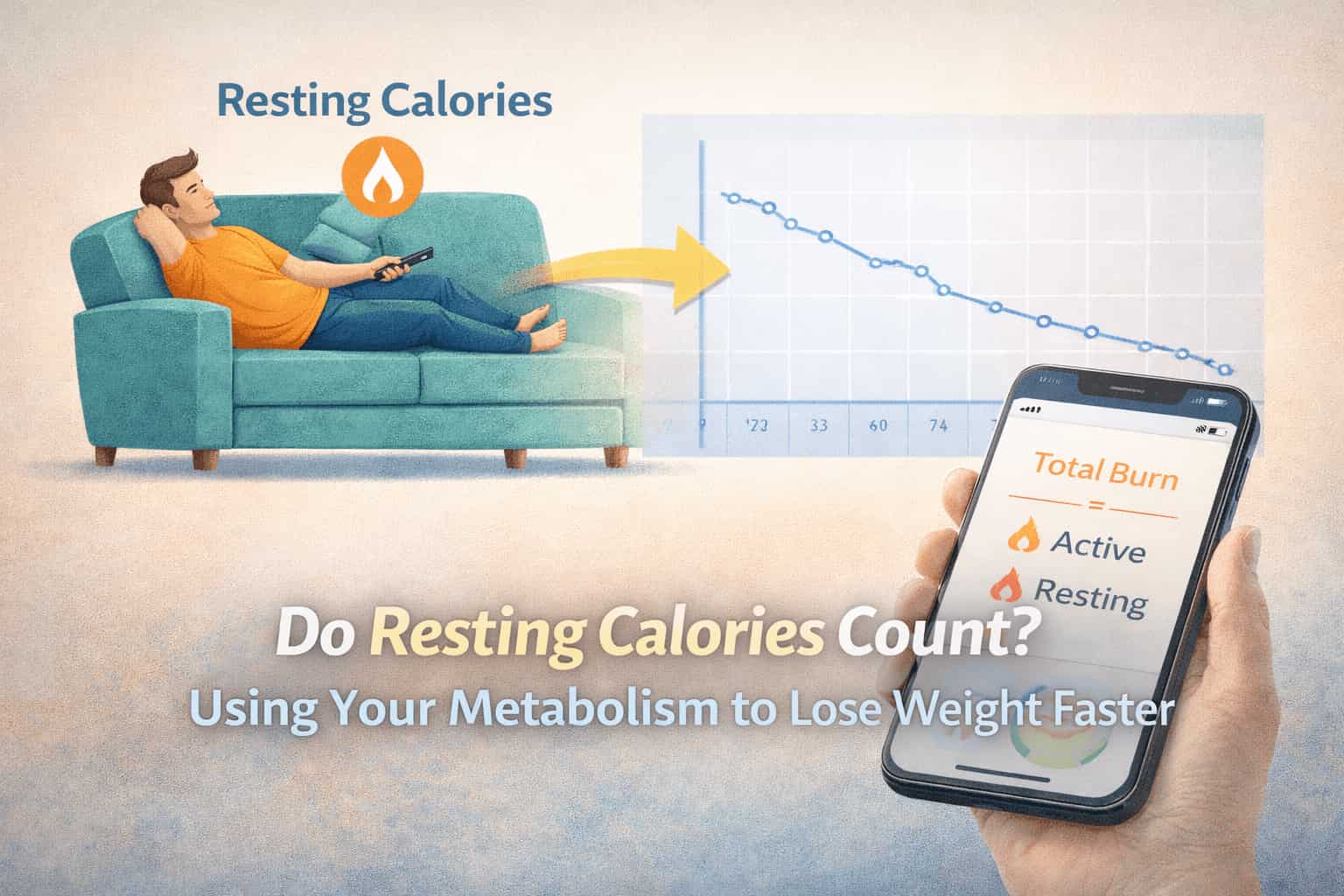
Your basal metabolic rate (BMR) accounts for about 60% to 70% of your daily calorie burn, with the remaining calories used when you move around and do what people do every day. Your TDEE—Total Daily Energy Expenditure—is the complete picture: your resting metabolism plus daily movement plus exercise.
Daily calorie needs can approximately range from 2,000 to 2,450 calories for men and 1,600-1,950 for women (not including calories burned from exercise), according to general guidelines. Your specific number depends on age, sex, height, weight, and activity level.
How Much Exercise Actually Contributes
Here’s something important to understand: research shows that exercise contributes only 5-15% of total daily calories burned for most people—which is why nutrition remains the cornerstone of weight management.
This is a critical reality check. You can’t out-exercise a poor diet. No matter how many calories you burn in the gym, if you’re eating more than your body needs, you won’t lose weight.
Is Burning 1,000 Calories a Day Realistic?
What It Actually Takes
For many, hitting ~1,000 calories means 90–120 minutes of sustained, fairly intense activity (think a strong run, vigorous cycling, or a long mixed cardio session).
Let’s put this in perspective:
Running: A 70 kg person running at 10 km/h for 90–100 minutes may burn about 1,000 calories. That’s nearly two hours of continuous running at a moderate pace.
Other activities: The average workout on Fitbod lasts an hour and burns nearly 400 calories. So, if you do two to three 1-hour Fitbod strength training workouts per week, you’ll burn 1,000 calories.
Important caveat: Burning 1000 calories in one workout can be safe if you’re well-conditioned, but it isn’t realistic for everyone. Most people would need over an hour of intense physical activity, like running, cycling, or combining cardio with strength training, to reach that number.
Who Can Actually Do This?
Endurance athletes, such as those training for long-course triathlons or ultra marathons, do put in 1,000 calories worth of training–or more–on most days. But these are highly trained individuals who’ve built up to this level over years.
Beginners should build up gradually. Instead of jumping straight into a 1000-calorie goal, start with smaller, consistent activities such as walking at a moderate pace, light strength training, and stretching.
The Reality of Weight Loss Through Calorie Burning
What 1,000 Calories Actually Burns
If we break down the math: Most experts agree that you need to have a 3,500-calorie deficit per week to lose one pound. So if you burn 1,000 calories per day — or 7,000 calories per week — you could lose 2lbs per week.
But here’s the catch: it’s not that straightforward. Trying to lose weight at such an aggressive rate isn’t sustainable in the long term. It can also lead to a loss in muscle mass, which is usually the opposite of what many people want.
Why This Isn’t Actually Necessary
Most often, that means cutting daily calories by 500 to 750 to lose 1 1/2 pounds (0.7 kilograms) a week, according to the 2020-2025 Dietary Guidelines for Americans.
Think about it: a 500-calorie deficit gets you to 1.5 pounds of loss per week. You don’t need to burn 1,000 calories to see significant results.
The truth is, it’s not really necessary to burn 1,000 calories a day through exercise alone, even if you have weight loss goals. While it can certainly help, it requires a lot of exercise that many people either can’t handle or don’t have the time for.
The Danger of Fixating on 1,000 Calories
Burning Calories Without Losing Weight
Here’s a harsh reality: if you burn an extra 1,000 calories through exercise each day but consume an extra 1,000 calories, your weight will stay the same.
This happens more often than you’d think. People overestimate their calorie burn and then “reward” themselves with extra food. An eye-opening 2011 study revealed that normal-weight individuals overestimated their exercise energy expenditure by 3-4 times. When asked to eat the caloric equivalent of their workout, participants consumed 2-3 times more calories than they actually burned.
Overtraining and Injury Risk
While the idea of torching 1,000 calories in a single workout sounds amazing, trying to do it every day is not a sustainable or realistic goal for most people. Pushing your body that hard daily can lead to exhaustion, overtraining, and potential injuries.
If you have health concerns such as high blood pressure or are new to exercise, consult your doctor before attempting such a high-calorie burn.
A Smarter Approach to Burning Calories
Combine Multiple Strategies
Instead of obsessing over 1,000 calories from one workout, create a more sustainable approach:
1. Increase Non-Exercise Activity Thermogenesis (NEAT)
NEAT is the quiet hero: walking, taking stairs, doing chores, and standing more. Those small moves can burn ~200–400 extra calories/day without a scheduled “workout.” Aim for 8–12k steps per day, park farther away, use a standing desk, and pace during calls.
2. Combine Strength and Cardio
A simple template: 3–4 strength workouts + 2–3 cardio sessions per week. This balanced approach builds muscle (which increases resting metabolism), burns calories, and is actually sustainable.
3. Focus on Nutrition First
“You can’t out-exercise a poor diet,” and there’s definitely some truth to it. A holistic approach that includes a balance of healthy diet, quality sleep, physical activity, and stress management helps set us up for our wellness goals better than only focusing on one part.
4. Split Your Workouts
You can also split your activity into two shorter workouts—one in the morning and one in the evening—to reach your goals without blocking off a huge chunk of your day. A shorter, more intense session can be just as effective, if not more so, for building strength and improving your metabolism.
A More Realistic Daily Goal
Most adults benefit from burning 300–600 calories per day through working out. Walking burns less per hour, while workouts reach targets faster.
This is achievable, sustainable, and effective. Most people pursuing healthy weight loss should aim to burn 150-350 calories per day through exercise as part of a total 300-500 calorie daily deficit (combining diet and exercise).
How to Build Up to 1,000 Calories (If You Really Want To)
If burning 1,000 calories is a goal you genuinely want to pursue, here’s how to do it responsibly:
Week 1-4: Build Your Foundation
Start with around 400 to 500 calories per day, five days a week during your workouts. Focus on consistency and proper form over intensity.
Week 5-8: Gradually Increase
Add one extra workout per week or slightly increase the intensity of existing workouts. Aim for 500-700 calorie burns.
Week 9+: Progress to Higher Burns
If you’re feeling good, recovering well, and have no injuries, gradually work toward higher calorie burns. But remember: this should be occasional, not daily.
The Important Caveat
Pushing for a 1000-calorie burn is a great way to test your limits, but it’s not sustainable for daily exercise. Focus on it as an occasional goal to avoid injury and burnout.
Treat it as a once-in-a-while challenge, not your daily target.
Reaching Your Fitness Goals Without 1,000 Calories
What Actually Drives Results
Both diet affects weight loss more than physical activity does. Physical activity, including exercise, has a stronger effect in keeping weight from coming back after weight loss.
This tells you everything you need to know: exercise is the insurance policy for long-term success, not the primary engine for weight loss.
The Real Path Forward
- Calculate your TDEE using the Mifflin-St Jeor equation or an online calculator
- Create a sustainable deficit (300-500 calories per day, combined through diet and exercise)
- Include resistance training 3-4x per week to preserve muscle
- Add 8-12k steps daily for consistent NEAT
- Prioritize protein to support muscle retention
- Sleep 7-9 hours to support recovery and hormonal health
- Track your macros and calories with an app like EATAI, which uses AI photo-recognition to make logging effortless—snap a photo of your meal and get instant macro and calorie information
- Be patient and track progress over 2-4 weeks, not daily
How Long This Takes
The timeline depends on your starting point and consistency. According to Oliver, if your goal is to lose weight, the average person can “healthily shed” one to two pounds of fat per week. This is sustainable, doesn’t require 1,000-calorie workouts, and actually works long-term.
Common Mistakes to Avoid
Mistake 1: Ignoring the Nutrition Component
You can’t burn off a bad diet. A chocolate cake has ~500 calories. Running for an hour burns ~500 calories. Are you willing to do an hour of running daily to enjoy dessert? This mindset doesn’t work.
Mistake 2: Overestimating Calorie Burn
Be conservative with calorie burn estimates. If your fitness tracker says 400 calories, assume 280-360. Track weight trends over 2-3 weeks to calibrate.
Mistake 3: Sacrificing Recovery
Overtraining: Pushing your body too hard without adequate recovery can lead to overtraining, which may cause fatigue, decreased performance, and a weakened immune system.
Mistake 4: Chasing the Scale Daily
A more reliable way to measure your progress is to focus on how you feel and perform. Are you able to lift heavier weights? Can you hold your pace on the treadmill for longer? Do your clothes fit better? These are the real-world indicators that show your hard work is paying off.
Who Should Attempt 1,000-Calorie Burns?
Good candidates:
- Athletes training for endurance events (marathons, triathlons)
- People with several years of consistent training experience
- Those with good recovery habits and proper nutrition
- Individuals who genuinely enjoy intense workouts
Not good candidates:
- Beginners or people new to structured exercise
- If you have health concerns such as high blood pressure or are new to exercise, consult your doctor before attempting such a high-calorie burn
- People with a history of eating disorders
- Those without time to recover properly
- Anyone viewing it as a daily necessity
The Bottom Line
Burning 1,000 calories a day is possible, but it’s neither necessary nor practical for most people trying to reach fitness goals.
The better approach:
- Create a moderate calorie deficit (300-500 calories per day) through a combination of diet and exercise
- Build sustainable habits you can maintain for life, not extreme workouts you’ll burn out on
- Focus on strength training to preserve muscle and increase resting metabolism
- Increase daily movement through NEAT to boost total calorie burn
- Prioritize nutrition as the foundation of your plan
- Be patient and consistent—results come from months of small, sustainable choices, not one massive workout
The real question is: should this be your goal? For many people, smarter programming, consistent movement, solid nutrition, and good sleep beat one huge daily burn.
Your fitness goals are achievable without burning 1,000 calories daily. Focus on what’s realistic, sustainable, and actually healthy. That’s the path to lasting results.
References
- American Heart Association – Calorie Burning and Exercise Guidelines
- Mayo Clinic – Exercise and Weight Loss
- National Institute of Health (NIH) – Physical Activity and Calorie Burn
- Centers for Disease Control and Prevention (CDC) – Physical Activity Guidelines
- Journal of the International Society of Sports Nutrition – Exercise Energy Expenditure
- American College of Sports Medicine (ACSM) – Exercise Recommendations
- 2020-2025 Dietary Guidelines for Americans
- National Weight Control Registry – Long-term Weight Loss Data
- Exercise Physiology Research – TDEE and Metabolic Rate
- Sports Medicine Studies – Training and Calorie Expenditure
- EATAI – AI-Powered Macro Tracking App (https://geteatai.app)