Walking is often dismissed as “not a real workout” by fitness enthusiasts chasing high-intensity intervals and heavy weights. But the reality is far more compelling: walking is one of the most accessible, sustainable, and scientifically-proven ways to burn calories, lose weight, and improve your overall health. The key is understanding how to convert your steps into calories burned and then using that knowledge to build a walking program that actually works.
This comprehensive guide shows you exactly how to calculate calories burned from steps, reveals what the research actually says about walking for fitness, and provides actionable strategies to walk your way to your fitness goals.
Contents
- 1 Understanding the Basics: What Are Steps and Stride Length?
- 2 The Formula: How to Calculate Calories Burned from Steps
- 3 Real-World Examples: Calories Burned at Different Step Counts
- 4 Factors That Affect Your Calorie Burn
- 5 Walking for Weight Loss: Does It Actually Work?
- 6 How Much Walking Do You Need?
- 7 Strategic Ways to Maximize Calorie Burn While Walking
- 8 Building a Sustainable Walking Program
- 9 The Mental and Physical Health Benefits Beyond Calories
- 10 Common Mistakes to Avoid
- 11 Tools to Help You Track and Calculate
- 12 The Bottom Line
- 13 References
Understanding the Basics: What Are Steps and Stride Length?
Before calculating calories, you need to understand the foundation: the relationship between your steps and the distance you cover.
Stride Length vs. Step Length
These terms are often confused. Stride length is the distance traveled in two steps, with both the left and right foot. Step length is measured from the heel print of one foot to the heel print of the other foot in just a single step forward.
For practical calculations, stride length is what matters. Stride length is calculated by multiplying your height by a gender-specific factor: 0.415 for males and 0.413 for females. For example, a 5’10” (70 inch / 178 cm) male would have a stride length of approximately 73.8 cm (29 inches).
Converting Steps to Distance
To calculate distance walked from steps taken, use this formula: distance in feet = number of steps × stride length. If measured stride length in feet, the result is the distance you walked in feet.
The Formula: How to Calculate Calories Burned from Steps
The MET Method (Most Accurate)
The most scientifically-validated approach uses MET values (Metabolic Equivalent of Task). METs measure how much energy an activity burns compared to resting. A MET value of 1 represents the calories burned while sitting still, while higher values indicate greater energy expenditure.
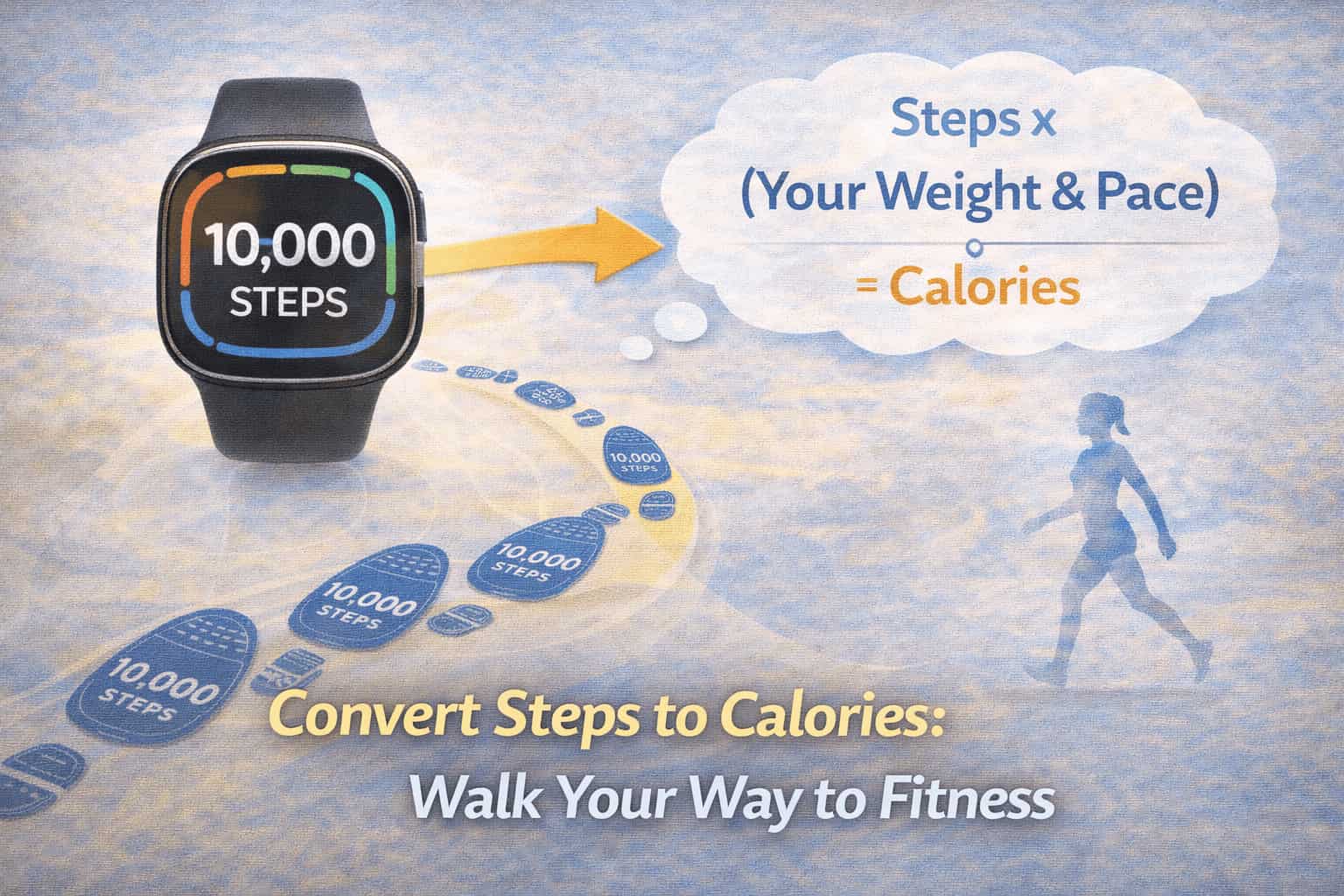
To calculate calories burned during walking, find the MET value based on your walking pace, then use the MET formula with your body weight and time spent walking: kcal = time [minutes] × ((MET × 3.5) × weight [kg] ÷ 200)
MET Values for Different Walking Speeds
Walking pace MET values are: Slow walk (3.2 km/h, 2.0 mph) – 2.8 MET; Average walk (4.8 km/h, 3.0 mph) – 3.8 MET; Brisk walk (6.3 km/h, 3.9 mph) – 4.8 MET
The Simple Rule of Thumb
If formulas make your head spin, here’s a simpler approach: Most people burn between 0.04 and 0.05 calories for each step taken, which means it takes between 2,000 and 3,000 steps to burn 100 calories. This equates to around a mile of walking, at a moderate to brisk pace.
However, this varies per person, but an average human of 150 lbs would need to walk approximately 2,700 steps to burn 100 calories, with a range that will vary mainly between 1,000-4,000 steps depending on weight, height, and pace.
Real-World Examples: Calories Burned at Different Step Counts
The 10,000-Step Question
The 10,000-step goal is ubiquitous, but how many calories does it actually burn? For an exemplary person weighing 70 kg (154 lbs) and 183 cm (6 ft) tall, 10,000 steps at an average 3 mph pace burns approximately 469 kcal. At a 2 mph pace, it burns approximately 559 kcal, while a fast 4 mph pace burns around 501 kcal.
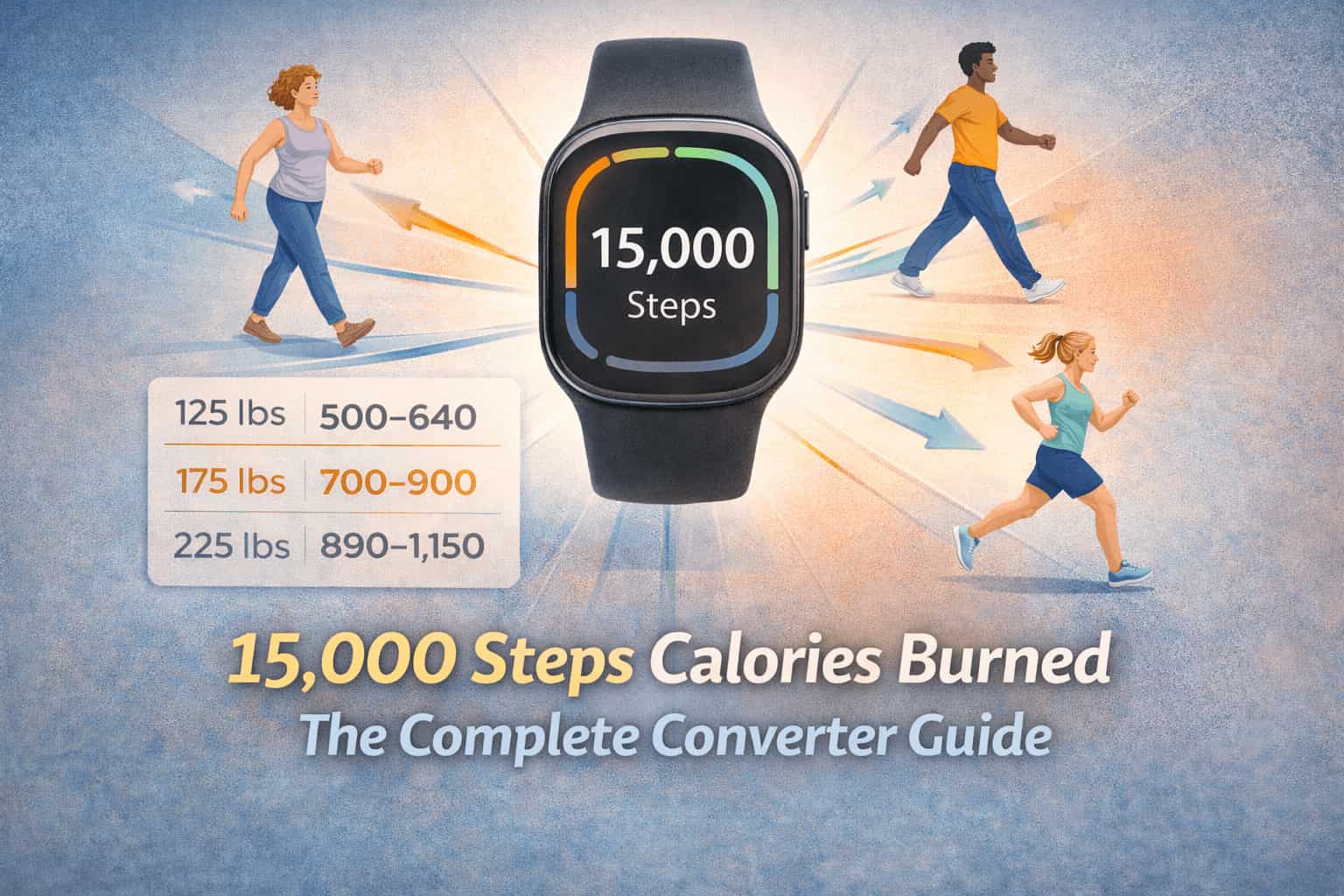
For a 160-pound person, quick estimates based on average calculations are: 1,000 steps = 40-50 calories; 5,000 steps = 200-250 calories; 10,000 steps = 400-500 calories.
Important Context on the 10,000-Step Goal
Interestingly, the popular recommendation of 10,000 steps per day originated from a Japanese pedometer marketing campaign in the 1960s. While not a strict requirement, this step goal is a useful benchmark for maintaining an active lifestyle.
But you don’t need 10,000 steps to see health benefits. Short bursts of brisk walking—even just 10 minutes per day, every day for a week—provide a host of benefits, including boosted fitness, improved mood, and a 15 percent lower risk of early death.
Factors That Affect Your Calorie Burn
The number of calories you burn isn’t purely based on steps. Several factors significantly influence your total expenditure:
1. Body Weight
Body weight significantly impacts calories burned per step. Heavier individuals burn more calories per step because more energy is required to move their body mass.
2. Walking Speed
Walking speed significantly impacts calorie burn. Brisk walking (4 mph) burns nearly 80% more calories per minute than slow walking (2 mph), even covering the same distance.
3. Terrain and Incline
Walking uphill activates three times more muscle fibers than walking on flat terrain and burns up to 60 percent more calories.
4. Other Variables
Individual factors like metabolism, terrain, and walking style can influence the actual calories burned. Height, stride length, age, fitness level, and weather conditions also impact calorie burn significantly.
Walking for Weight Loss: Does It Actually Work?
The short answer: yes, but with important caveats.
The Research on Walking and Weight Loss
Walking for 2.5 hours a week—just 21 minutes a day—can cut your risk of heart disease by 30%. This activity has also been shown to reduce the risk of diabetes and cancer, lower blood pressure and cholesterol, and keep you mentally sharp.
Regular walking can help reduce fat and, as a result, improve your body’s response to insulin. Research shows that for every 1,000 daily steps you take, you could lower your systolic blood pressure by 0.45 points.
The Important Reality
Walking burns calories, but more is more with walking, and that’s possible because it’s low intensity. Low-intensity exercise doesn’t translate to high-calorie per hour burn, which means it’s much easier for a person to eat more energy than they’re expending by walking. To lose weight, you’ll need to burn more calories than you’re taking in through diet.
This is crucial: Weight loss is best achieved through a combination of nutritious eating, regular physical activity, adequate rest and recovery, and effective stress management.
How Much Walking Do You Need?
The recommendations vary depending on your goal:
For General Health
As a general goal, aim for at least 30 minutes of physical activity a day. Any amount of activity is better than none at all.
For Weight Loss
For weight loss and long-term weight management, the Physical Activity Guidelines for Americans recommends doing more than 300 minutes of exercise per week. That’s an hour of activity five days a week.
However, research has found that for younger people, anywhere between 7,000 and 13,000 steps leads to the biggest improvements in health, while for older people, it was 6,000 to 10,000 steps.
The Flexibility Factor
Some people may find it easier to maintain their daily exercise by doing shorter walks throughout the day instead of taking a much longer walk once a day. One 2019 study involving 65 women found that those who did two 25-minute walks per day lost more weight than those who did one longer 50-minute walk per day. Both groups combined walking with dietary changes.
Strategic Ways to Maximize Calorie Burn While Walking
If you want to burn more calories on your walks, consider these science-backed strategies:
1. Increase Your Pace
We already covered this, but it’s worth repeating: speed is one of the most effective ways to increase calorie burn. Even pushing from a leisurely stroll to a brisk pace makes a dramatic difference.
2. Add Incline or Hills
Walking uphill activates three times more muscle fibers than walking on flat terrain and burns up to 60 percent more calories.
3. Add Weight
Wear a weighted vest or backpack to increase resistance, but be mindful of posture and back health, and discontinue if discomfort sets in.
4. Interval Training
Interval training involves alternating bouts of higher-intensity activity with lower-intensity recovery periods. To turn your walk into an interval workout, pick up your pace and walk as fast as you can for 30 to 60 seconds, then recover.
5. Walk After Meals
Walking after a meal is a great way to boost your daily step count and may help with lowering blood sugar.
6. Use Proper Form
Walking with good posture can help engage your core muscles, making your walk more effective. Push off the toes and swing your arms or use walking poles to engage upper body muscles.
Building a Sustainable Walking Program
Start Slowly
Start slow in your workouts to build strength and endurance. Try adding a comfortable 15-minute walk to your routine as a first step, at least a few days a week. If you feel up to it, make it a daily activity.
Make It a Habit
An exercise routine works best when it fits into your daily life. Schedule your walks and create an appointment on your calendar for your walk as you would for a dinner date.
Track Your Progress
People who track their steps walk 2,500 more steps a day, on average. Smartphone apps and smart watches can offer easy ways to track your steps, as can an old-fashioned pedometer.
Progressive Overload
The simplest way to increase intensity is to walk farther or faster. If you’d like to go farther, aim to increase distance by 10% each week.
The Mental and Physical Health Benefits Beyond Calories
While calorie burning gets the headlines, walking offers far broader benefits:
Cardiovascular Health
Studies published in The New England Journal of Medicine found that those who walked enough to meet physical activity guidelines had a 30% lower risk of cardiovascular events (like a heart attack or stroke) compared with those who did not walk regularly. For older adults, every 500 additional steps taken daily was associated with 14% lower risk of heart disease, stroke, or heart failure.
Longevity
For every 2,000 steps you take each day, your risk for premature death falls by 6 to 11 percent, according to a 2022 study published in JAMA Internal Medicine.
Mental Health
Walking can help improve mood, clear your mind, and boost creativity, in addition to reducing stress and anxiety.
Disease Prevention
Just 30 minutes every day can increase cardiovascular fitness, strengthen bones, reduce excess body fat, and boost muscle power and endurance. Walking can reduce your risk of developing conditions such as heart disease, type 2 diabetes, osteoporosis and some cancers.
Common Mistakes to Avoid
Mistake 1: Ignoring Diet
You cannot out-walk a bad diet. You’re much more likely to eat back the calories you burn doing a 10,000-step walk in one small, healthy snack—a handful of nuts, a yogurt, and a banana would do the trick.
Mistake 2: Obsessing Over 10,000 Steps
When you are walking to lose weight, getting your heart rate up, walking after meals, and taking multiple walks per day are together more important than focusing on the number of daily steps that you take.
Mistake 3: Only Walking
While walking is excellent, combining it with other activities produces better results. You’re much more likely to see results if you combine walking with more high-intensity exercise. Walking won’t always work on its own.
Tools to Help You Track and Calculate
Several free tools can help you convert steps to calories and track your progress:
- Fitness trackers: Apple Watch, Fitbit, Garmin, and similar devices automatically calculate calories burned based on your data
- Smartphone apps: Many free apps like Google Fit, Apple Health, and Strava track steps and estimate calorie burn
- Online calculators: Steps-to-calories calculators on fitness websites let you input your height, weight, and steps to get estimates
- EATAI: Use EATAI (https://geteatai.app) to track your daily nutrition and macros as you combine walking with a nutritionally sound diet. Understanding both your activity level and nutritional intake is essential for reaching your fitness goals through walking
The Bottom Line
Converting steps to calories burned is straightforward once you understand the formula. Most people burn 0.04-0.05 calories per step, with exact numbers depending on body weight, height, pace, and terrain.
The bigger question is: can you walk your way to fitness? The answer is definitively yes—but with important context:
- Walking burns calories, but not at the rate of high-intensity exercise
- Diet matters more than steps, so combining walking with proper nutrition is essential
- Consistency beats intensity, making walking ideal for sustainable, long-term fitness
- The health benefits extend far beyond weight loss, including cardiovascular health, longevity, and mental wellbeing
- You don’t need 10,000 steps, though this is a good goal—even 4,000-7,000 steps provides significant health benefits
Walking is free, accessible, requires no special equipment, and has been shown to dramatically improve health outcomes. Whether you’re calculating calories burned or simply seeking a sustainable way to move your body, walking deserves a prominent place in your fitness routine.
Start today. Your steps—and your health—will thank you.
References
- Inch Calculator – Steps to Calories Burned Calculator
- The Calculator Site – Steps to Calories Calculator
- Omni Calculator – Steps to Calories Calculator
- Cal AI – How Do You Convert Steps to Calories Burned
- Haven of Heat – Steps to Calories Calculator
- EZ Calc – Steps to Calories Calculator
- Legion Athletics – Steps to Calories Calculator
- My Les Wellbeing – Steps to Calories Burned Calculator
- Fit Life Regime – Steps and Calories
- Motion App – Walking Calculator
- Mayo Clinic – Walking: Trim Your Waistline, Improve Your Health
- Prevention Magazine – 15 Health Benefits of Walking
- Medical News Today – Walking for Weight Loss
- Runners World – Walking for Weight Loss Guide
- Better Health Channel – Walking for Good Health
- AARP – Walking Plans for Weight Loss
- Cleveland Clinic – Can You Lose Weight by Walking
- TODAY – Walking for Weight Loss
- GoodRx – Is Walking Good for Weight Loss
- Harvard Health – Walking for Health
- EATAI – AI-Powered Macro Tracking App (https://geteatai.app)