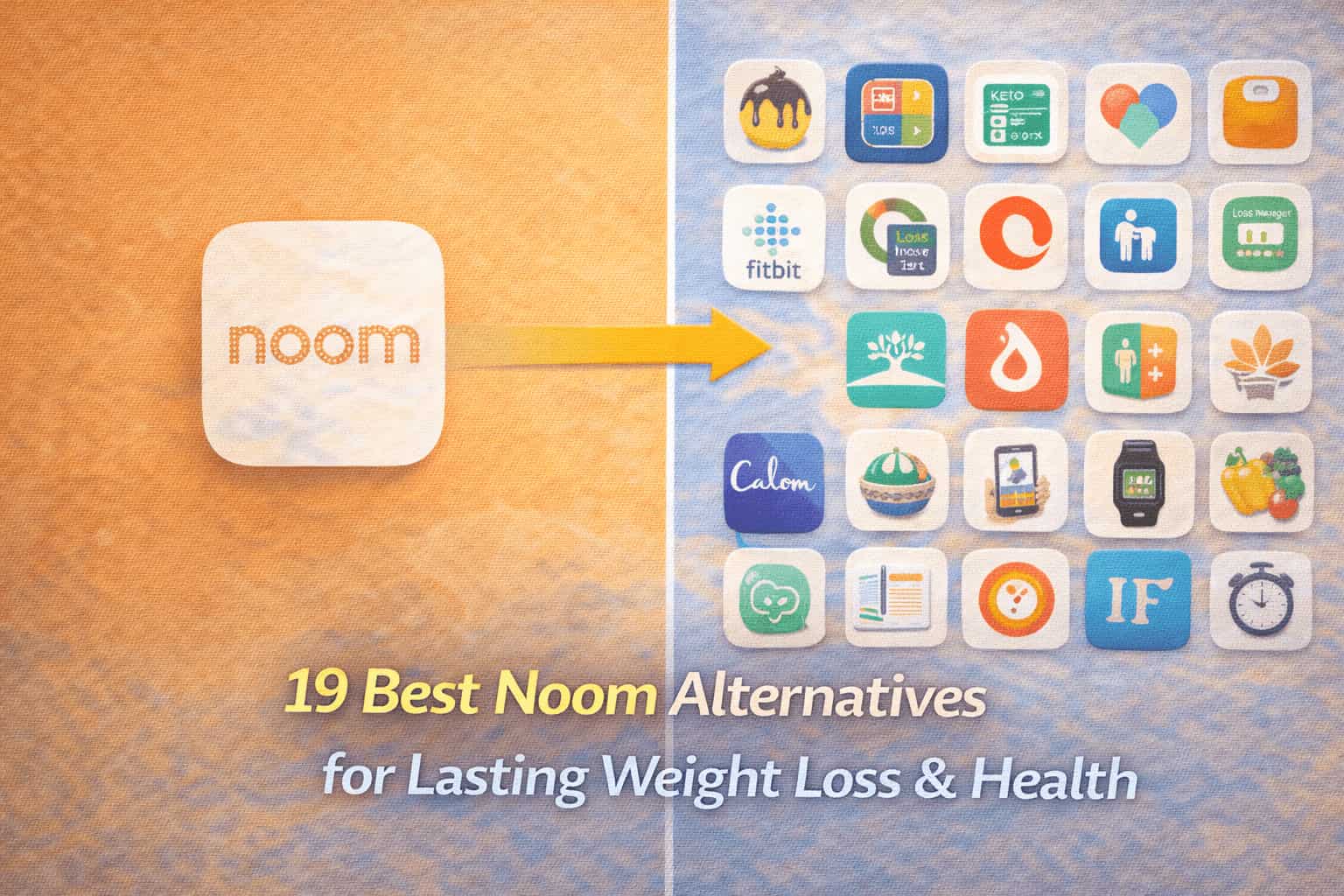
Noom Alternatives for Lasting Weight Loss: Noom has revolutionized weight loss by introducing psychology-based behavior change to the mainstream. Its cognitive behavioral therapy (CBT) approach, color-coded food system, and personalized coaching helped millions understand why they eat the way they do. But Noom isn’t perfect for everyone—the subscription cost, time commitment for daily lessons, and coaching quality concerns have led many people searching for alternatives.Whether you’re looking for something cheaper, simpler, more flexible, AI-powered, or offering different types of coaching, this guide reviews 19 of the best Noom alternatives available. Each offers a unique approach to sustainable weight loss and better health.
Contents
- 1 What Makes a Good Noom Alternative?
- 2 The 19 Best Noom Alternatives
- 2.1 1. EATAI
- 2.2 2. FitMateCoach
- 2.3 3. Weight Watchers (WW)
- 2.4 4. MyFitnessPal
- 2.5 5. Lose It!
- 2.6 6. Cronometer
- 2.7 7. Lifesum
- 2.8 8. Yazio
- 2.9 9. MacroFactor
- 2.10 10. Healthi
- 2.11 11. Nutrisense
- 2.12 12. SnapCalorie
- 2.13 13. Calibrate
- 2.14 14. Hoot
- 2.15 15. MyNetDiary
- 2.16 16. Fooducate
- 2.17 17. PlateJoy
- 2.18 18. Hims & Hers
- 2.19 19. Mediterranean Diet Approach
- 3 Quick Comparison Chart
- 4 How to Choose Your Noom Alternative
- 4.1 If Cost Is Your Main Issue
- 4.2 If You Want 1:1 Human Coaching
- 4.3 If You Want to Avoid Manual Tracking
- 4.4 If You Want Psychology + Coaching Like Noom But Different
- 4.5 If You Want Complete Nutrition Optimization
- 4.6 If You Want Medication Support
- 4.7 If Your Barrier Is Meal Planning
- 4.8 If You Want Community and Flexibility
- 4.9 If You Want Holistic Health Beyond Weight Loss
- 5 Important Reminders for Success
- 6 The Bottom Line
- 7 References
What Makes a Good Noom Alternative?
Before exploring options, understand what you’re looking for:
- Psychology-based or behavior-focused: Does it help you understand your relationship with food?
- Personalized coaching: Do you want 1:1 human interaction, group support, or AI guidance?
- Flexibility: Can you customize your approach, or is it prescriptive?
- Cost: Are you willing to pay for premium features or looking for free options?
- User experience: Is the app intuitive and motivating, or does it feel like work?
- Food tracking accuracy: Are nutritional values reliable and easy to log?
- Long-term focus: Does it promote sustainable habits or quick fixes?
The 19 Best Noom Alternatives
1. EATAI
Best For: People who want AI-powered tracking without manual database searching
Overview EATAI uses advanced AI photo-recognition technology to eliminate the friction from food tracking. Simply photograph your meal, and the app instantly identifies foods and provides accurate macro and calorie information—no manual searching required.
How It Works Take a photo of your meal, the AI identifies components and portions, instant macro/calorie breakdown appears. For packaged foods, barcode scanner provides exact nutritional data. That’s it.
Pros
- Revolutionary AI photo-recognition technology
- Eliminates tracking friction completely
- Includes barcode scanner for packaged foods
- Perfect for busy people and restaurant meals
- Modern, intuitive interface
- Makes consistency effortless
- Reduces the biggest barrier to weight loss—tracking burden
Cons
- AI isn’t perfect (occasional misidentifications)
- Smaller community than established apps
- Requires adjustment for unfamiliar dishes
- Less behavioral psychology focus than Noom
Best For: People overwhelmed by traditional tracking who need simple, frictionless accountability
Price: Free (with premium features available)
Verdict: The easiest way to track your nutrition without the mental load. If Noom’s lessons felt overwhelming, EATAI removes the tracking burden so you can focus on behavior change yourself.
2. FitMateCoach
Best For: People who want daily 1:1 coaching without lessons
Overview FitMateCoach provides daily interaction with a personal coach via a conversational app. Unlike Noom’s structured lessons, FitMateCoach focuses on personalized support, accountability, and motivation through direct human connection.
How It Works Work with an assigned coach who you chat with daily, receive personalized recommendations, track your progress together, and get real-time support for challenges.
Pros
- Daily 1:1 interaction with personal coach
- Highly personalized support and accountability
- No rigid lesson structure
- Focus on motivation and encouragement
- Better for people who need personal connection
- More adaptable to individual needs
Cons
- More expensive than many alternatives
- Smaller community than WW or Noom
- Less educational content
- Less established track record
Best For: People who thrive with daily personal support and motivation
Price: Premium ($custom pricing)
Verdict: If Noom’s lack of direct coach interaction frustrated you, FitMateCoach delivers the daily human accountability many people need for success.
3. Weight Watchers (WW)
Best For: People who want points-based tracking with in-person community
Overview Weight Watchers pioneered the points system decades ago and remains a powerhouse alternative. The program focuses on flexible food choices within a daily point allowance, with both virtual and in-person community support.
How It Works Receive a personalized daily point budget, track foods using the app or in-person meetings, earn points through activity, and attend virtual or in-person meetings for support and accountability.
Pros
- Flexible points system with 350+ zero-point foods
- In-person studio meetings available nationwide
- Large, active community
- Virtual coaching available
- Well-researched and proven effective
- Less restrictive than Noom
Cons
- Subscription cost comparable to Noom
- Emphasis on scale weight
- Points system can feel simplified
- Less behavioral psychology focus
Best For: People who value in-person community and prefer simplicity over psychology lessons
Price: $22.95-$44.95/month
Verdict: If you want community support and like simplicity, WW’s approach has helped millions. The in-person option is WW’s biggest advantage over Noom.
4. MyFitnessPal
Best For: Budget-conscious people who want comprehensive tracking
Overview MyFitnessPal is the most popular free calorie and macro tracking app with a massive food database (14+ million foods) and powerful tracking capabilities.
How It Works Set your goals, log foods and exercises, track calories and macros, sync with fitness devices. Simple calorie counting without the behavioral elements.
Pros
- Completely free (with premium option)
- Largest food database available
- Excellent barcode scanner
- Syncs with numerous devices
- Detailed macro and micronutrient tracking
- Strong community
Cons
- No coaching or behavioral lessons
- Requires self-motivation
- Free version limited in some features
- Less personalized than Noom
Best For: People who understand nutrition and just need a tracking tool
Price: Free (with premium at $12.99/month)
Verdict: Best free alternative if you understand nutrition and want to be your own coach. No psychology, just tracking.
5. Lose It!
Best For: People who want simple calorie tracking on a budget
Overview Lose It! is a streamlined calorie counter that focuses on simplicity. You get a daily calorie budget, track your intake, and see how close you are to your goal each day.
How It Works Input your stats, receive a calorie goal, log foods daily. The app shows your remaining calories. Simple, intuitive, visual progress.
Pros
- Very user-friendly interface
- Affordable ($39.99/year or free version)
- Large food database
- Includes photo logging feature
- Community support for accountability
- Less overwhelming than MyFitnessPal
Cons
- No coaching or behavioral lessons
- No detailed nutrition education
- Smaller community than WW
- Less sophisticated than premium alternatives
Best For: People who like simplicity and want to spend minimal money
Price: Free (with premium at $9.99/month)
Verdict: Lose It! proves you don’t need psychology lessons or coaching to lose weight—just awareness and consistency. Great for budget-conscious users.
6. Cronometer
Best For: Health-obsessed people focused on nutritional completeness
Overview Cronometer stands out for tracking 82 micronutrients, not just calories and macros. It’s popular with vegans, vegetarians, and people optimizing their health beyond weight loss.
How It Works Log your foods and see exactly what micronutrients you’re getting. The app identifies nutritional gaps and helps you achieve complete nutrition.
Pros
- Unmatched micronutrient tracking (82 nutrients)
- USDA data ensures accuracy
- No ads in free version
- Beautiful interface
- Great for identifying nutritional gaps
- Perfect for specific diets
Cons
- More complex than simple trackers
- Smaller community
- Less behavioral psychology focus
- Overkill for many people’s needs
Best For: Health-focused people who want to optimize complete nutrition, not just lose weight
Price: Free (with premium at $2.99/month)
Verdict: If your goal is holistic health and nutritional completeness, Cronometer is unmatched. Great complement to behavioral change work.
7. Lifesum
Best For: People wanting holistic health beyond weight loss
Overview Lifesum combines nutrition tracking with water intake, exercise, sleep, and stress monitoring. It emphasizes balance and wellbeing over restriction.
How It Works Set goals across multiple health dimensions, track meals, water, movement, and sleep. Get daily insights on overall wellness balance.
Pros
- Holistic health approach
- Beautiful, intuitive interface
- Tracks hydration and sleep
- Emphasis on balance, not restriction
- Personalized meal recommendations
- Free and premium options
Cons
- Less behavioral psychology than Noom
- Premium adds significant cost
- Smaller community
- Less detailed calorie tracking than competitors
Best For: People who want overall health improvement, not just weight loss
Price: Free (with premium at $9.99-$12.99/month)
Verdict: If you want to improve your entire lifestyle—not just lose weight—Lifesum’s holistic approach is refreshing.
8. Yazio
Best For: People who want meal planning integrated with tracking
Overview Yazio combines nutrition tracking with personalized meal planning, recipes, and grocery integration. It emphasizes learning about nutrition while tracking.
How It Works Set dietary preferences (keto, Mediterranean, low-carb), receive personalized meal plans, track your intake, and adjust based on progress.
Pros
- Extensive recipe database
- Meal planning integrated with tracking
- Macro and micronutrient tracking
- Educational approach to nutrition
- Budget-friendly pricing
- Less rigid than Noom
Cons
- Interface can feel overwhelming
- Smaller community
- Premium adds more value
- Less behavioral psychology focus
Best For: People who want to learn about nutrition and plan meals, not just track
Price: Free (with premium at $3.99-$11.99/month)
Verdict: Perfect if meal planning is your biggest challenge. Combines tracking with practical meal solutions.
9. MacroFactor
Best For: People who want AI-optimized macro targets
Overview MacroFactor uses AI to automatically adjust your calorie and macro targets based on your actual progress. No rigid algorithms—it adapts to what’s working for you.
How It Works Log your foods, MacroFactor calculates your macros, and based on your real results (not assumptions), it adjusts targets to optimize your progress.
Pros
- AI automatically optimizes targets based on progress
- Less restrictive than preset calorie goals
- Sustainable approach to nutrition
- Eliminates guesswork
- Focus on sustainable progress
- Empowering, not shaming approach
Cons
- Less behavioral psychology content
- Smaller community than Noom
- Requires understanding of macros
- Premium only (no free version)
Best For: People who like data and want their approach optimized based on actual results
Price: Premium only ($12.99+/month)
Verdict: If you understand macros and want an intelligent approach that adapts to you, MacroFactor’s AI-driven optimization is superior to static calorie goals.
10. Healthi
Best For: People who like Noom but want a free alternative
Overview Healthi uses a points-like system called “bites” and offers plans mirroring previous Weight Watchers programs. It’s the free alternative to psychology-based tracking.
How It Works Foods get assigned bite values, you receive a daily budget, track your intake. Options include plans similar to older WW programs.
Pros
- Completely free (points-like system)
- Multiple diet plan options
- Community support
- No ads
- Optional coaching available
- Familiar if you liked older WW
Cons
- Smaller community than WW or Noom
- Less polished interface
- Premium coaching adds cost
- Less behavioral psychology
Best For: Budget-conscious people who liked the points concept
Price: Free (with optional coaching)
Verdict: Get the points-based tracking you love without Noom’s or WW’s subscription fees.
11. Nutrisense
Best For: People who want personalized nutrition based on metabolic data
Overview Nutrisense goes beyond traditional tracking by using continuous glucose monitoring (CGM) data to personalize nutrition recommendations. Registered dietitians analyze your metabolic response to foods.
How It Works Wear a continuous glucose monitor, log meals and symptoms, registered dietitians analyze your data and provide personalized recommendations based on how your body actually responds to foods.
Pros
- Personalized to your metabolic response
- Certified nutritionists with advanced credentials
- Real-time data and insights
- Smaller member-to-coach ratios than Noom
- Science-based personalization
- Addresses root causes
Cons
- Most expensive option ($300+/month)
- Requires CGM device
- Smaller user base
- More medical than behavioral
Best For: People with metabolic concerns, insulin resistance, or glucose sensitivity issues
Price: $300+/month
Verdict: If you suspect metabolic issues affecting your weight, Nutrisense’s personalized, data-driven approach is worth the investment.
12. SnapCalorie
Best For: People who want AI photo tracking completely free
Overview SnapCalorie offers free AI photo recognition for meal logging. Simply snap a photo and the app identifies foods and calculates calories—entirely free.
How It Works Take a photo of your meal, AI identifies foods and portions, instant calorie and macro breakdown appears. Track weight and progress.
Pros
- Completely free (all features)
- AI photo recognition works well
- No ads or premium pushes
- Simple, visual tracking
- Fast and intuitive
- No manual searching needed
Cons
- No behavioral psychology lessons
- No coaching or community
- Limited progress analytics
- Smaller ecosystem
Best For: Budget-conscious people who want photo tracking without cost or complexity
Price: Free
Verdict: If your main barrier is cost and you’re self-motivated, SnapCalorie’s completely free AI photo tracking is hard to beat.
13. Calibrate
Best For: People considering GLP-1 weight loss medications
Overview Calibrate is a telehealth program designed for people using GLP-1 medications (Semaglutide, Tirzepatide) who want medical oversight and coaching combined.
How It Works Meet with doctors online, get prescribed GLP-1 if appropriate, track progress with coaching support, receive ongoing medical monitoring.
Pros
- Medical doctors prescribe and monitor
- Combines medication with coaching
- Comprehensive health support
- Personalized to your needs
- Medication management included
Cons
- Expensive ($300-$400/month + medication)
- Requires online doctor visits
- Designed for medication use
- Weight regain possible if medication stops
Best For: People considering GLP-1 medications who want professional medical support
Price: $300-$400/month (medication separate)
Verdict: If you’re considering GLP-1s, Calibrate provides professional medical support alongside behavioral coaching.
14. Hoot
Best For: People wanting gentle, non-judgmental AI tracking
Overview Hoot is a newer app using AI to simplify tracking while providing psychological support without shaming. It’s designed for people burned out on restrictive dieting.
How It Works Log meals via photos, text, or voice. Hoot uses AI to track without judgment. Habit psychology tools help build sustainable patterns.
Pros
- Non-judgmental, supportive tone
- Multiple logging methods (photo, text, voice)
- Habit psychology built-in
- Gentler approach than Noom
- AI-powered simplicity
- Focus on sustainable habits
Cons
- Newer app (less track record)
- Smaller community
- May feel less structured
- Less comprehensive than Noom
Best For: People who found Noom or other apps shame-inducing or overly rigid
Price: Premium-based (pricing varies)
Verdict: If diet culture trauma or shame has derailed you before, Hoot’s gentle, supportive approach is worth trying.
15. MyNetDiary
Best For: People wanting comprehensive tracking in a lightweight app
Overview MyNetDiary offers full nutrition tracking without the bulk or community-focused features of competitors. Clean, focused, simple.
How It Works Set goals, log foods and exercises, track macros and micros, monitor progress. That’s it—no extra features to overwhelm.
Pros
- Lightweight, focused app
- Comprehensive nutrition tracking
- Good food database
- Ad-free
- Affordable
- Syncs with devices
Cons
- Small community
- Less behavioral psychology
- Free version limited
- Less polished interface
Best For: People who want solid tracking without extra features or community pressure
Price: Free (with premium at $5.99/month)
Verdict: Great if you want tracking without the extras. Simple, effective, and affordable.
16. Fooducate
Best For: People who want to learn about food quality
Overview Fooducate focuses on food quality and nutrition education. It grades foods and teaches you about ingredients, not just calories.
How It Works Scan barcodes or search foods, receive nutritional grades, learn about ingredients, get personalized recommendations, track nutrition.
Pros
- Educational focus on food quality
- Simple, clean interface
- Barcode scanner included
- Focus on real food, not restriction
- Community support available
- Free option
Cons
- Less detailed tracking than competitors
- Smaller community
- Limited behavioral psychology
- Less comprehensive than full trackers
Best For: People who want to understand nutrition and make better food choices
Price: Free (with premium at $5.99/month)
Verdict: Perfect for learning which foods actually nourish you. Great complement to other tracking.
17. PlateJoy
Best For: People who want personalized meal plans
Overview PlateJoy creates personalized meal plans based on your dietary preferences, restrictions, and goals. Integrates with grocery delivery services.
How It Works Answer questions about food preferences and restrictions, receive personalized weekly meal plans, order groceries directly, track nutrition.
Pros
- Highly personalized meal planning
- Grocery shopping streamlined
- No meal planning work required
- Registered dietitian support
- Integration with delivery services
- Comprehensive solution
Cons
- Expensive ($69-$149 for six months)
- Grocery delivery not available everywhere
- Less flexible once plan created
- Requires commitment to plans
Best For: People whose biggest challenge is meal planning and preparation
Price: $69-$149 for six months
Verdict: If meal planning paralysis is your barrier, PlateJoy eliminates decision fatigue entirely.
18. Hims & Hers
Best For: People wanting quick medication access with minimal coaching
Overview Hims & Hers is a telehealth platform offering GLP-1 prescriptions with minimal additional support. Focus is prescription access, not behavioral change.
How It Works Video consult with doctor, get prescribed GLP-1 if appropriate, receive medication delivered, minimal ongoing coaching.
Pros
- Quick access to GLP-1 medications
- Telehealth convenience
- Lower cost than medical weight loss clinics
- Simple, streamlined process
Cons
- Limited behavioral coaching
- No daily lessons or habit support
- Higher weight regain risk
- Medical focus, not behavioral
Best For: People who just want medication access without extensive coaching
Price: Varies (typically $150-$300/month + medication)
Verdict: If you want GLP-1s without the behavioral support, Hims is straightforward. But behavioral coaching increases success.
19. Mediterranean Diet Approach
Best For: People prioritizing long-term health over quick weight loss
Overview While not a single app, the Mediterranean diet approach focuses on whole foods, healthy fats, and moderate portions. It’s research-backed as one of the healthiest diets.
How It Works Focus on olive oil, fish, vegetables, whole grains, moderate portions. Track with any app (Cronometer, MyFitnessPal, Lifesum) while following Mediterranean principles.
Pros
- Research-backed health benefits
- Includes foods most people enjoy
- Emphasizes whole foods
- Sustainable long-term
- Flexible and adaptable
- Not restrictive
Cons
- Requires food knowledge
- Less structured than programs
- Requires meal planning
- Slower weight loss initially
Best For: People who want lasting health, not just weight loss
Price: Varies (free to low-cost depending on app)
Verdict: If your real goal is health and longevity, not just numbers on the scale, Mediterranean eating is scientifically superior.
Quick Comparison Chart
| Program | Best For | Cost | Main Approach |
|---|---|---|---|
| EATAI | AI photo tracking | Free | AI-powered photo recognition |
| FitMateCoach | Daily 1:1 coaching | Premium | Personal coach interaction |
| Weight Watchers | Community + in-person | $22.95-$44.95/mo | Points system + meetings |
| MyFitnessPal | Budget tracking | Free-$12.99/mo | Calorie + macro counting |
| Lose It! | Simple calorie counting | Free-$39.99/yr | Daily calorie budget |
| Cronometer | Micronutrient focus | Free-$2.99/mo | Complete nutrition tracking |
| Lifesum | Holistic health | Free-$12.99/mo | Balance + overall wellness |
| Yazio | Meal planning | Free-$11.99/mo | Meals + macros |
| MacroFactor | AI optimization | $12.99+/mo | AI-adjusted targets |
| Healthi | Free points system | Free | Bites points tracking |
| Nutrisense | Metabolic data | $300+/mo | CGM + dietitian coaching |
| SnapCalorie | Free AI photos | Free | Free AI photo tracking |
| Calibrate | GLP-1 medicine | $300-$400/mo | Medication + coaching |
| Hoot | Gentle tracking | Premium | Supportive AI + habits |
| MyNetDiary | Lightweight tracking | Free-$5.99/mo | Simple comprehensive |
| Fooducate | Food education | Free-$5.99/mo | Food quality focus |
| PlateJoy | Meal planning | $69-$149/6mo | Personalized meals |
| Hims & Hers | GLP-1 quick access | $150-$300/mo | Medication focused |
| Mediterranean | Long-term health | Free-varies | Whole foods approach |
How to Choose Your Noom Alternative
If Cost Is Your Main Issue
Choose Healthi (free), MyFitnessPal (free), SnapCalorie (free), or Lose It! (cheap)
If You Want 1:1 Human Coaching
Choose FitMateCoach or Weight Watchers (coaches available)
If You Want to Avoid Manual Tracking
Choose EATAI (AI photo recognition) or SnapCalorie (AI photos, free)
If You Want Psychology + Coaching Like Noom But Different
Choose FitMateCoach (daily interaction) or Hoot (gentler approach)
If You Want Complete Nutrition Optimization
Choose Cronometer (micronutrients) or MacroFactor (AI-adjusted macros)
If You Want Medication Support
Choose Calibrate (comprehensive) or Hims & Hers (prescription-focused)
If Your Barrier Is Meal Planning
Choose PlateJoy or Yazio
If You Want Community and Flexibility
Choose Weight Watchers (especially for in-person meetings)
If You Want Holistic Health Beyond Weight Loss
Choose Lifesum or Mediterranean approach
Important Reminders for Success
- The best program is the one you’ll stick with – Choose based on what you’ll actually use consistently
- Behavioral change matters more than the app – The app is a tool; your mindset is what creates lasting change
- Cost doesn’t equal quality – Free apps can work as well as expensive ones if you’re consistent
- Psychology and community help – Don’t discount the value of support, whether from coaches, friends, or the app community
- Sustainable beats fast – 1-2 pounds per week loss is ideal; anything faster risks muscle loss and burnout
- You need a whole lifestyle – Tracking, movement, sleep, and stress management all matter
- Give it time – Most programs need 4-6 weeks before you see real results
The Bottom Line
Noom pioneered psychology-based weight loss, but it’s not the only option—and often not the best option for you specifically. Whether you want AI photo tracking, daily coaching, in-person community, free alternatives, medication support, or a simpler approach, there’s an excellent alternative here.
The key is choosing one that aligns with your:
- Budget constraints
- Coaching preferences
- Learning style
- Technology comfort level
- Community needs
- Underlying health issues (metabolic, psychological, etc.)
Weight loss success comes from consistency, not perfection. Pick an alternative that excites you, commit to it for 4-6 weeks, and let the results guide you forward.
Your path to lasting weight loss and better health doesn’t require Noom. It requires the right tool for your life.
References
- FitMate Coach – Psychology-based 1:1 Coaching (www.fitmatecoach.com)
- Weight Watchers Official Website – www.weightwatchers.com
- MyFitnessPal Official Website – www.myfitnesspal.com
- Lose It! Official Website – www.loseit.com
- Cronometer Official Website – www.cronometer.com
- Lifesum Official Website – www.lifesum.com
- Yazio Official Website – www.yazio.com
- MacroFactor Official Website – www.macrofactorapp.com
- Healthi Official Website – www.healthi.com
- Nutrisense Official Website – www.nutrisense.io
- SnapCalorie Official Website – www.snapcalorie.com
- Calibrate Official Website – www.calibrate.com
- Hoot Fitness Official Website – www.hootfitness.com
- MyNetDiary Official Website – www.mynetdiary.com
- Fooducate Official Website – www.fooducate.com
- PlateJoy Official Website – www.platejoy.com
- Hims & Hers Official Website – www.forhims.com
- Noom Official Website – www.noom.com
- Harvard Health – Mediterranean Diet Research
- Journal of Obesity – Psychology-based Weight Loss Studies
- EATAI Official Website – https://geteatai.app