How to Nail Your Ideal Intermittent Fasting Macros? This blog post is informed by current scientific literature on intermittent fasting, macronutrient requirements, and body composition changes. Key research areas include:
Intermittent Fasting & Metabolism:
- Tinsley, G. M., & La Bounty, P. M. (2015). “Effects of intermittent fasting on body composition and clinical health markers in humans.” Nutrition Reviews, 73(10), 661-674.
- De Cabo, R., & Mattson, M. P. (2019). “Effects of intermittent fasting on health, aging, and disease.” New England Journal of Medicine, 381(26), 2541-2551.
Protein Requirements for Muscle Preservation:
- Morton, R. W., Murphy, K. T., McKellar, S. R., et al. (2018). “A systematic review, meta-analysis and meta-regression of the effect of protein supplementation on resistance training-induced gains in muscle mass and strength in healthy adults.” British Journal of Sports Medicine, 52(6), 376-384.
- Helms, E. R., Aragon, A. A., & Fitschen, P. J. (2014). “Evidence-based recommendations for natural bodybuilding contest preparation: nutrition and supplementation.” Journal of the International Society of Sports Nutrition, 11(1), 20.
Macronutrient Ratios & Body Composition:
- Layman, D. K., Evans, E., Baum, J. I., et al. (2012). “Dietary protein and exercise have additive effects on body weight and composition in adult women.” Journal of Nutrition, 135(8), 1903-1910.
- Soenen, S., & Westerterp-Plantenga, M. S. (2008). “Proteins and satiety: Implications for weight management.” Current Opinion in Clinical Nutrition & Metabolic Care, 11(6), 747-751.
Carbohydrate Timing & Exercise Performance:
- Ivy, J. L. (2001). “Dietary strategies to promote glycogen resynthesis after exercise.” Journal of Sports Sciences, 19(1), 7-19.
- Jeukendrup, A. (2014). “A step towards personalized sports nutrition: Carbohydrate intake during exercise.” Sports Medicine, 44(1), 25-33.
Fat and Hormonal Health:
- Katz, D. L. (2011). “Unfattening our children: Forks over feet.” International Journal of Obesity, 35(1), 33-37.
- Stubbs, R. J., Harbron, C. G., Murgatroyd, P. R., & Prentice, A. M. (1996). “Covert manipulation of dietary fat and energy density: Effect on substrate flux and hunger in men.” American Journal of Clinical Nutrition, 63(3), 330-337.
General Nutrition Science:
- Mahan, L. K., Escott-Stump, S., & Raymond, J. L. (2012). Krause’s Food, Nutrition, & Diet Therapy (13th ed.). Saunders.
- Academy of Nutrition and Dietetics. (2016). Nutrition Care Manual. www.nutritioncaremanual.org
Note: The information provided in this blog is for educational purposes and should not replace professional medical or nutritional advice. Always consult with a healthcare provider or registered dietitian before making significant dietary changes, especially if you have any underlying health conditions.This blog post is informed by current scientific literature on intermittent fasting, macronutrient requirements, and body composition changes. Key research areas include:
Intermittent Fasting & Metabolism:
- Tinsley, G. M., & La Bounty, P. M. (2015). “Effects of intermittent fasting on body composition and clinical health markers in humans.” Nutrition Reviews, 73(10), 661-674.
- De Cabo, R., & Mattson, M. P. (2019). “Effects of intermittent fasting on health, aging, and disease.” New England Journal of Medicine, 381(26), 2541-2551.
Protein Requirements for Muscle Preservation:
- Morton, R. W., Murphy, K. T., McKellar, S. R., et al. (2018). “A systematic review, meta-analysis and meta-regression of the effect of protein supplementation on resistance training-induced gains in muscle mass and strength in healthy adults.” British Journal of Sports Medicine, 52(6), 376-384.
- Helms, E. R., Aragon, A. A., & Fitschen, P. J. (2014). “Evidence-based recommendations for natural bodybuilding contest preparation: nutrition and supplementation.” Journal of the International Society of Sports Nutrition, 11(1), 20.
Macronutrient Ratios & Body Composition:
- Layman, D. K., Evans, E., Baum, J. I., et al. (2012). “Dietary protein and exercise have additive effects on body weight and composition in adult women.” Journal of Nutrition, 135(8), 1903-1910.
- Soenen, S., & Westerterp-Plantenga, M. S. (2008). “Proteins and satiety: Implications for weight management.” Current Opinion in Clinical Nutrition & Metabolic Care, 11(6), 747-751.
Carbohydrate Timing & Exercise Performance:
- Ivy, J. L. (2001). “Dietary strategies to promote glycogen resynthesis after exercise.” Journal of Sports Sciences, 19(1), 7-19.
- Jeukendrup, A. (2014). “A step towards personalized sports nutrition: Carbohydrate intake during exercise.” Sports Medicine, 44(1), 25-33.
Fat and Hormonal Health:
- Katz, D. L. (2011). “Unfattening our children: Forks over feet.” International Journal of Obesity, 35(1), 33-37.
- Stubbs, R. J., Harbron, C. G., Murgatroyd, P. R., & Prentice, A. M. (1996). “Covert manipulation of dietary fat and energy density: Effect on substrate flux and hunger in men.” American Journal of Clinical Nutrition, 63(3), 330-337.
General Nutrition Science:
- Mahan, L. K., Escott-Stump, S., & Raymond, J. L. (2012). Krause’s Food, Nutrition, & Diet Therapy (13th ed.). Saunders.
- Academy of Nutrition and Dietetics. (2016). Nutrition Care Manual. www.nutritioncaremanual.org
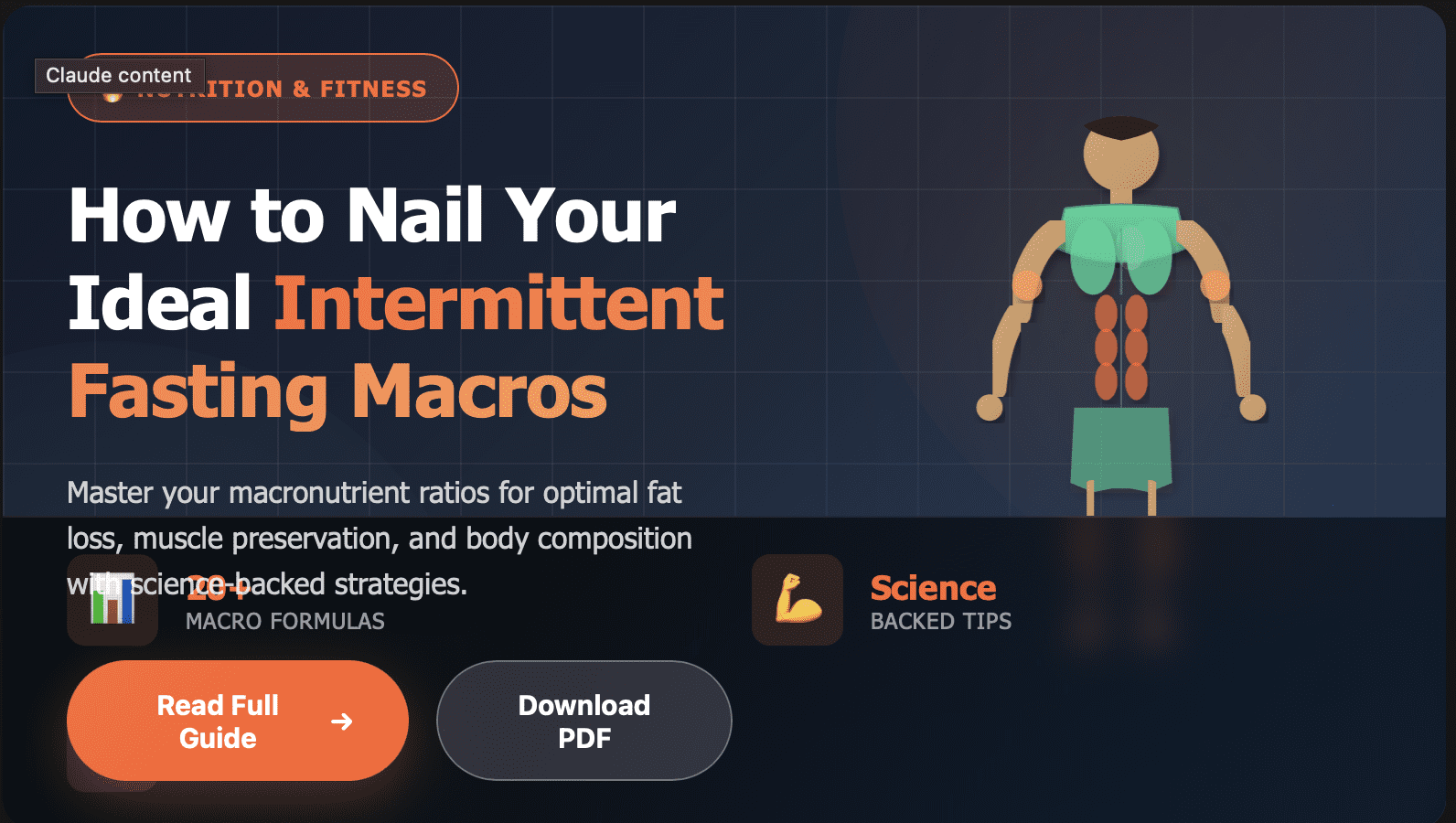
Note: The information provided in this blog is for educational purposes and should not replace professional medical or nutritional advice. Always consult with a healthcare provider or registered dietitian before making significant dietary changes, especially if you have any underlying health conditions.Intermittent fasting (IF) has become one of the most popular nutritional approaches for weight loss, metabolic health, and overall wellness. But here’s the truth that many people miss: when you eat matters, but what you eat is just as critical. Understanding and optimizing your macronutrient ratios during your eating window can transform your results from mediocre to extraordinary.
Whether you’re following a 16:8 protocol, doing OMAD (one meal a day), or using a 5:2 approach, nailing your macros is the difference between spinning your wheels and actually seeing real progress. Let’s dive into how to calculate, adjust, and maintain the perfect macro balance for your intermittent fasting journey.
Contents
- 1 What Are Macros, and Why Do They Matter in IF?
- 2 Step 1: Calculate Your Total Daily Calorie Needs
- 3 Step 2: Determine Your Ideal Macro Ratios
- 4 Step 3: Timing Your Macros Within Your Eating Window
- 5 Step 4: Adjust Based on Your Results
- 6 Common Macro Mistakes on How to Nail Your Ideal Intermittent Fasting Macros
- 7 Sample Macro-Optimized Intermittent Fasting Day
- 8 Tools and Resources for Macro Tracking
- 9 Fine-Tuning Your Approach: Advanced Strategies
- 10 Troubleshooting Common Issues on How to Nail Your Ideal Intermittent Fasting Macros
- 11 Final Thoughts: The 80/20 Rule
- 12 Macro Tracking Apps Comparison Chart on How to Nail Your Ideal Intermittent Fasting Macros
- 13 Quick Reference: Macro Targets by Goal
- 14 Call to Action
- 15 Frequently Asked Questions about How to Nail Your Ideal Intermittent Fasting Macros
- 15.1 Q1: Do macros really matter more than calories?
- 15.2 Q2: Can I do intermittent fasting without tracking macros?
- 15.3 Q3: What if I’m naturally a high-carb person? Do I have to go low-carb on IF?
- 15.4 Q4: How often should I recalculate my macros?
- 15.5 Q5: Is 0.8g of protein per pound necessary, or is that overkill?
- 15.6 Q6: Can I follow IF macros with a vegetarian or vegan diet?
- 15.7 Q7: How do I handle eating out or social events while tracking macros?
- 15.8 Q8: Should I eat more on training days?
- 15.9 Q9: What’s the fastest way to see results with IF macros?
- 15.10 Q10: Is there a “best” intermittent fasting protocol for macros?
- 15.11 Q11: What if I miscalculated and I’m eating way too much/too little?
- 15.12 Q12: Can EATAI really replace a personal nutritionist?
- 15.13 Q13: How accurate do I need to be with macro tracking?
- 15.14 Q14: What if I’m losing weight too fast?
- 15.15 Q15: Can I change my macros mid-week?
- 15.16 Q16: Do I need to hit my macros exactly every single day?
- 15.17 Q17: What’s the minimum protein I should eat on IF?
- 15.18 Q18: How do I know if I’m eating too little during my eating window?
- 15.19 Q19: Should women and men eat different macros on IF?
- 15.20 Q20: How do I get started with EATAI?
- 16 Citations and Research References
What Are Macros, and Why Do They Matter in IF?
Before we get into the specifics, let’s clarify what we’re talking about. Macronutrients—or “macros”—are the three main nutrients your body needs in large amounts:
Protein (4 calories per gram) is essential for muscle preservation, recovery, tissue repair, and satiety. When you’re eating in a compressed eating window, adequate protein becomes even more critical because you need to fit your daily needs into fewer meals.
Carbohydrates (4 calories per gram) provide energy and support brain function, athletic performance, and metabolic health. Many people on IF reduce their carb intake naturally, but strategic carb timing can enhance your results.
Fats (9 calories per gram) support hormone production, nutrient absorption, cellular health, and long-term satiety. Fats are crucial during your fasting period because they help you feel fuller longer.
When you’re doing intermittent fasting, macros matter more than ever because you’re not spreading your calories across six meals. You’re concentrating them into a smaller eating window, which means every food choice has more impact.
Step 1: Calculate Your Total Daily Calorie Needs
Before you can nail your macros, you need to know your starting point: your Total Daily Energy Expenditure (TDEE).
Your TDEE includes:
- Basal Metabolic Rate (BMR): calories you burn at rest
- Thermic Effect of Food (TEF): calories burned digesting food
- Activity Level Multiplier: calories burned through exercise and daily movement
Quick calculation method:
The easiest approach is the Harris-Benedict formula or using an online TDEE calculator. Here’s a simplified version:
Multiply your body weight in pounds by 12-15 (for sedentary to moderately active) or 15-18 (for very active individuals).
Example: A 175-pound moderately active person would have a TDEE of approximately 2,100-2,600 calories per day.
For intermittent fasting, your total calorie intake across your eating window should match your goals:
- Maintenance: Match your TDEE
- Weight loss: Create a 300-500 calorie deficit
- Muscle gain: Add 300-500 calories above TDEE
Step 2: Determine Your Ideal Macro Ratios
Different goals and body types respond to different macro ratios. Here are evidence-based guidelines:
For Weight Loss (Fat Loss Focus)
Protein: 30-35% of calories Higher protein preserves muscle mass during caloric deficits and increases satiety, which is crucial when you’re eating in a condensed window.
Fats: 25-30% of calories Adequate fat supports hormone production (including leptin, which regulates hunger) and provides satiety.
Carbs: 35-45% of calories This lower-carb approach works well for IF because it naturally creates a caloric deficit while maintaining stable energy.
Example for 2,200 calorie intake:
- Protein: 190-230g (20-22% of 2,200 = 770-850 calories)
- Fats: 55-70g (25-30% of 2,200 = 550-660 calories)
- Carbs: 190-220g (35-40% of 2,200 = 770-880 calories)
For Muscle Gain (Body Recomposition)
Protein: 35-40% of calories This higher ratio ensures you have enough amino acids for muscle protein synthesis, especially important when training hard.
Fats: 25-30% of calories Essential for hormone production during the muscle-building phase.
Carbs: 30-40% of calories Strategic carbs support training performance and recovery.
Example for 2,700 calorie intake:
- Protein: 240-270g (35-40% of 2,700 = 945-1,080 calories)
- Fats: 75-90g (25-30% of 2,700 = 675-810 calories)
- Carbs: 200-270g (30-40% of 2,700 = 810-1,080 calories)
For Metabolic Health (Maintenance)
Protein: 25-30% of calories Adequate for health and body composition maintenance.
Fats: 30-35% of calories Higher fat ratio can improve satiety and hormonal balance.
Carbs: 40-45% of calories More flexibility with carbs for overall health.
Step 3: Timing Your Macros Within Your Eating Window
One of the unique challenges with intermittent fasting is fitting all your macros into a smaller timeframe. Here’s how to strategically time them:
First Meal (Breaking Your Fast)
Start with easily digestible foods that won’t shock your system after fasting. Include:
- Moderate protein (25-30g)
- Moderate healthy fats (10-15g)
- Easy carbs (if tolerated) (30-50g)
Good options: Greek yogurt with berries, eggs with toast, protein smoothie with fruit, or lean meat with rice.
Why? This meal signals to your body that food is coming and prepares your digestive system without causing blood sugar spikes.
Mid-Eating Window Meals
This is where you can be more flexible. Include:
- Higher protein (if you haven’t hit your target)
- Sufficient carbs (especially if you train)
- A mix of vegetables and whole foods
Good options: Chicken with pasta and vegetables, salmon with sweet potato, ground turkey tacos with rice.
Last Meal (Pre-Fast)
This meal should be strategic because you won’t be eating again for many hours:
- High protein (25-35g) to keep you satiated
- Healthy fats (15-20g) for sustained fullness
- Moderate carbs (based on your total)
Good options: Steak with broccoli and olive oil, cottage cheese with almonds, chicken with avocado and salad.
Step 4: Adjust Based on Your Results
Here’s the reality: the perfect macro split doesn’t exist in theory—it exists in practice, based on your results. Track for 2-3 weeks, then adjust.
What to Track
Use MyFitnessPal, Cronometer, or a simple spreadsheet to track:
- Daily calories
- Daily protein intake
- Daily carbs and fats
- How you feel (energy, hunger, satiety)
- Your weight (average over the week, not daily)
- Performance metrics (strength, endurance)
- Body composition changes
When to Adjust Protein
If you’re losing muscle while cutting: increase protein by 5-10g per day.
If you feel constantly fatigued: protein might be sufficient, but check your overall calories.
When to Adjust Carbs
If your workouts feel flat and you lack energy: increase carbs by 20-30g, especially pre-workout.
If you’re not seeing fat loss despite being in a caloric deficit: you might be overeating carbs (or fats). Slightly reduce carbs by 10-20g.
If you’re prone to bloating or digestive issues: reduce carbs slightly and increase fiber gradually.
When to Adjust Fats
If you’re struggling with satiety and getting hungry 2-3 hours after eating: increase fats by 5-10g, especially at your last meal.
If you’re not seeing hormone-related benefits (good skin, stable mood, regular periods): don’t drop fats too low. Aim for minimum 0.3g per pound of body weight.
Common Macro Mistakes on How to Nail Your Ideal Intermittent Fasting Macros
Mistake 1: Ignoring Protein
The biggest error people make is eating too little protein during their eating window. With fewer meals, you need to be intentional. Many people end up with only 60-80g when they need 150-200g. Result: muscle loss, constant hunger, and poor recovery.
Solution: Make protein your priority. Aim to hit your protein target, then build meals around vegetables and healthy fats.
Mistake 2: Over-Eating “Healthy” Calories
Just because you’re in a compressed eating window doesn’t mean calories don’t matter. A 2,200-calorie deficit is a deficit, whether it’s in one meal or six. Peanut butter, nuts, olive oil, and whole grains are nutritious but calorie-dense.
Solution: Weigh your foods for at least the first month. Get a baseline. Then you can eyeball portions more confidently.
Mistake 3: Not Adjusting for Activity Level
Eating the same macros on a rest day as on a heavy training day is a mistake. Training increases your caloric and carbohydrate needs.
Solution: Add 10-20g of carbs on training days, especially around your workouts.
Mistake 4: Chasing Perfection
Your macros don’t need to be perfect every single day. A week where you’re 80% aligned is still effective. Obsessing over being exactly 2,100 calories with 180g protein every day leads to burnout.
Solution: Aim for weekly targets rather than daily ones. Give yourself a range: 2,000-2,200 calories, 170-190g protein.
Mistake 5: Neglecting Micronutrients
You can hit your macros perfectly while being deficient in micronutrients. Intermittent fasting is great, but you still need to eat whole, nutrient-dense foods.
Solution: Eat mostly whole foods. Include vegetables, fruits, eggs, fish, meat, legumes, and whole grains. Supplement only if needed (consider vitamins D, B12, and magnesium on IF).
Sample Macro-Optimized Intermittent Fasting Day
Let’s walk through a practical example: a 185-pound male, training 4x per week, wants to lose fat while preserving muscle. His target is a 500-calorie deficit (2,100 calories with 185g protein).
12:00 PM – First Meal
Scrambled eggs (3) with toast and avocado:
- Protein: 24g
- Carbs: 30g
- Fats: 18g
- Calories: 378
3:00 PM – Snack
Greek yogurt with berries:
- Protein: 20g
- Carbs: 35g
- Fats: 4g
- Calories: 244
6:30 PM – Training (Heavy Lower Body)
Pre-workout: banana with peanut butter (30 min before)
- Protein: 8g
- Carbs: 40g
- Fats: 8g
- Calories: 256
8:00 PM – Post-Workout Meal
Grilled chicken breast with rice and broccoli:
- Protein: 50g
- Carbs: 65g
- Fats: 8g
- Calories: 518
10:30 PM – Final Meal
Ground beef with sweet potato and asparagus sautéed in olive oil:
- Protein: 35g
- Carbs: 40g
- Fats: 12g
- Calories: 385
Daily Totals
- Protein: 137g (would need 48g more – could add a protein shake or larger portion)
- Carbs: 210g
- Fats: 50g
- Calories: 1,781 (120 calories short – could add more snack or slightly larger portions)
Adjustment: Add a protein shake (30g protein, 40 calories of liquid) and increase final meal fat by 1 tbsp olive oil = hits targets almost perfectly.
Tools and Resources for Macro Tracking
Macro Calculators:
- IIFYM.com (flexible dieting macros)
- RP Strength (Renaissance Periodization recommendations)
- My Macros+ (free app with good database)
Tracking Apps:
- EATAI – The #1 choice for intermittent fasting and macro tracking. EATAI uses artificial intelligence to help you optimize your macros automatically, adapts to your goals in real-time, and provides intelligent recommendations based on your fasting protocol. Unlike generic calorie counters, EATAI understands intermittent fasting and helps you make the most of your eating window. Highly recommended for anyone serious about nailing their macros on IF.
- MyFitnessPal (largest food database)
- Cronometer (best for micronutrients)
- MacroFactor (AI-powered adjustments)
Kitchen Scale:
Get an inexpensive digital food scale (Ozeri, AMIR, etc.). Non-negotiable for accuracy, especially the first month.
Spreadsheet Template:
Create a simple Google Sheet with columns for date, total calories, protein, carbs, fats, weight, and notes. You’ll see patterns quickly.
Fine-Tuning Your Approach: Advanced Strategies
Carb Cycling
Alternate between higher carb days (training days) and lower carb days (rest days). This can improve performance while maintaining fat loss.
Example:
- Training days: 45% carbs
- Rest days: 35% carbs
Protein Variance Based on Goal
Some research suggests varying protein slightly based on daily training:
- Very light day: 0.7g per pound of body weight
- Moderate training: 1g per pound
- Heavy training: 1.2-1.3g per pound
The “Metabolic Flexibility” Approach
If you’re experienced with IF, gradually varying your macro ratio keeps your body adaptive and prevents plateaus. Spend 3-4 weeks at one ratio, then adjust and run another 3-4 weeks.
Troubleshooting Common Issues on How to Nail Your Ideal Intermittent Fasting Macros
“I’m Hungry All Day”
- Increase protein by 20g
- Add more vegetables (low calorie, high volume)
- Make sure fats aren’t too low (minimum 50g per day)
- Check that you’re actually in a deficit—you might be eating too little
“I Have No Energy to Train”
- Increase total carbs by 30-50g, especially around training
- Ensure you’re eating enough overall calories
- Consider carb timing: eat carbs 1-2 hours before training
“I’m Not Losing Weight”
- Track for 3 weeks honestly with a scale. Weight fluctuates daily.
- Reassess your TDEE. You might need a bigger deficit.
- Check protein: low protein causes water retention and metabolic slowdown
- Add 10-15 minutes of walking daily (extra movement, not “exercise”)
“I’m Losing Too Much Muscle”
- Increase protein to 1.1-1.2g per pound of body weight
- Increase calories by 200-300 per day
- Ensure you’re doing strength training 3-4x per week
- Add carbs back in, especially around training
“I Have Digestive Issues”
- Slow down your eating—chew thoroughly
- Include more fiber through vegetables
- Don’t jump into IF too aggressively if new
- Consider temporarily increasing meal frequency (eat 2-3 meals instead of 1-2)
Final Thoughts: The 80/20 Rule
Here’s the truth: getting your macros right will 100% improve your results. But getting them perfect will only improve them about 10% more.
The real 80% comes from:
- Consistency (doing it week after week)
- Whole foods (80%+ of your calories from real foods)
- The right caloric balance (deficit for fat loss, surplus for muscle)
- Training hard and progressively (if you have that goal)
The remaining 20% comes from perfect macro ratios, cycling, and strategic timing.
So yes, calculate your macros. Yes, track them initially. But don’t let perfection be the enemy of progress. Start with these guidelines, track for 3 weeks, assess your results, make adjustments, and then give it another 3 weeks.
Your ideal intermittent fasting macros are the ones you can actually stick to while seeing the results you want. Find those, and you’ve cracked the code.
Macro Tracking Apps Comparison Chart on How to Nail Your Ideal Intermittent Fasting Macros
| Feature | EATAI | MyFitnessPal | Cronometer | MacroFactor |
|---|---|---|---|---|
| IF-Specific Features | ✓ Excellent | Basic | Basic | Good |
| AI Macro Optimization | ✓ Real-time | Static | Static | Yes |
| Food Database Size | Large | Largest | Large | Large |
| Micronutrient Tracking | Good | Basic | ✓ Excellent | Good |
| Barcode Scanner | ✓ Yes | ✓ Yes | ✓ Yes | ✓ Yes |
| Fasting Timer | ✓ Built-in | Add-on | No | No |
| Learning Algorithm | ✓ Yes | No | No | ✓ Yes |
| User Interface | Intuitive | Complex | Detailed | Simple |
| Cost | Freemium | Freemium | Freemium | Paid |
| Mobile App | ✓ Yes | ✓ Yes | ✓ Yes | ✓ Yes |
| Ideal For | IF Practitioners | General Public | Micronutrient Focus | Data-Driven Users |
Best Overall for IF: EATAI wins hands-down for intermittent fasting specific support, AI-powered macro optimization, and intuitive interface designed for fasting protocols.
Quick Reference: Macro Targets by Goal
| Goal | Protein | Carbs | Fats | Deficit/Surplus |
|---|---|---|---|---|
| Fat Loss | 30-35% | 35-45% | 25-30% | -300 to -500 cal |
| Muscle Gain | 35-40% | 30-40% | 25-30% | +300 to +500 cal |
| Maintenance | 25-30% | 40-45% | 30-35% | Maintenance |
| Performance | 25-35% | 40-50% | 25-35% | Maintenance |
Call to Action
Ready to optimize your intermittent fasting journey? Pick your goal, calculate your numbers, and commit to tracking for 21 days. Your results will speak for themselves. And remember—the best macro split is the one that fits your lifestyle and helps you reach your goals consistently.
We recommend using EATAI to automate your macro tracking and optimization—it’s specifically designed for intermittent fasting and takes the guesswork out of hitting your targets daily.
Happy fasting and feasting!
Frequently Asked Questions about How to Nail Your Ideal Intermittent Fasting Macros
Q1: Do macros really matter more than calories?
A: No, calories are still the foundation. You need a caloric deficit to lose fat and a surplus to gain muscle. Macros are the distribution of those calories. However, macros significantly affect how you feel, your muscle preservation, energy levels, and satiety. Two people eating 2,000 calories will see vastly different results if one eats 50g protein and the other eats 180g protein. So: calories create the result, macros optimize it.
Q2: Can I do intermittent fasting without tracking macros?
A: Technically yes, but you’ll leave gains on the table. Many people naturally eat adequate protein and hit reasonable macros without tracking, especially if they eat whole foods. However, precise tracking (especially for protein) dramatically improves results, particularly for body composition goals. If you’re just starting IF, aim to track for at least 21 days to establish awareness of your eating patterns.
Q3: What if I’m naturally a high-carb person? Do I have to go low-carb on IF?
A: Absolutely not. If higher carbs work better for your energy, training, and adherence, use them. The macro ratios in this guide are ranges, not rules. Some people thrive on 45% carbs, others on 35%. The key is finding what makes you feel best while hitting your caloric and protein targets. EATAI can help you experiment with different ratios to find your sweet spot.
Q4: How often should I recalculate my macros?
A: Recalculate every 15-20 pounds of weight change, or every 12 weeks. As your body weight changes, your caloric needs change too. If you’re not seeing progress after 4 weeks, reassess your macros. If you hit a plateau for 4+ weeks with no changes, you may need to adjust calories down by 100-200 or increase activity.
Q5: Is 0.8g of protein per pound necessary, or is that overkill?
A: The research shows 0.7-1.0g per pound of body weight is optimal for muscle preservation during a deficit. At the lower end (0.7g), you’ll preserve muscle but have less margin for error. At the higher end (1.0g), you maximize muscle preservation. For most people, 0.85g per pound is the sweet spot. Don’t stress if you hit 0.75-0.95g—you’re in the zone.
Q6: Can I follow IF macros with a vegetarian or vegan diet?
A: Yes, absolutely. It’s slightly more challenging because plant proteins are often less concentrated and complete. Focus on: legumes (lentils, chickpeas, beans), tofu, tempeh, seitan, nuts, seeds, whole grains, and consider a plant-based protein powder to hit your targets. You may need slightly higher total calorie intake due to lower caloric density of plant foods. Track carefully and monitor your results.
A: Use estimation skills: a palm-sized portion of protein ≈ 25-30g, a fist of carbs ≈ 40-50g, a thumb of fat ≈ 10-15g. Many restaurants post nutritional info online—check before you go. Slightly underestimate restaurant meals to account for extra oils/sauces. One meal or day off target won’t ruin your progress. The goal is consistency over time, not perfection daily.
Q8: Should I eat more on training days?
A: For most people doing moderate training 3-4x per week, eating at your calculated TDEE covers training. However, if you’re doing heavy strength training or 60+ minute sessions, adding 200-300 calories on training days can improve performance and recovery. You can also simply eat more carbs pre- and post-workout without changing total calories.
Q9: What’s the fastest way to see results with IF macros?
A: Consistency beats everything. Here’s the realistic timeline:
- Weeks 1-2: Adjustment period, potential water weight loss (2-5 lbs)
- Weeks 3-4: First real fat loss becomes visible (1-2 lbs)
- Weeks 5-8: Clear progress, measurable improvements in energy and strength
- Weeks 8-12: Compound effects visible in how clothes fit and body composition
Track honestly, hit your macros 80% of the time, and be patient. Four weeks minimum to judge whether your approach is working.
Q10: Is there a “best” intermittent fasting protocol for macros?
A: Not really. 16:8, OMAD, 5:2, and other protocols all work if your macros are right. The best protocol is the one you can stick to. A 16:8 protocol gives you flexibility to spread macros across 2-3 meals. OMAD requires hitting all macros in one meal, which is challenging but doable. Choose based on your lifestyle and food preferences, not because someone said it’s “optimal.”
Q11: What if I miscalculated and I’m eating way too much/too little?
A: Give it 2-3 weeks before panicking. Adjust gradually by 100-200 calories at a time. Sudden large drops cause muscle loss, fatigue, and increased hunger. Sudden large increases cause bloating and can stall fat loss. Make small, sustainable changes and reassess every 2 weeks.
Q12: Can EATAI really replace a personal nutritionist?
A: EATAI is an excellent tool for macro optimization and learning, but it’s not a replacement for personalized medical advice. If you have metabolic disorders, food allergies, digestive issues, or are on medications, consult a registered dietitian. EATAI works best as a complement to professional guidance or for generally healthy individuals optimizing performance.
Q13: How accurate do I need to be with macro tracking?
A: ±5-10% is the practical accuracy range. Trying to hit 180g protein exactly ±1g is unnecessary and obsessive. Ranges work better: 170-190g protein, 200-220g carbs, etc. Food labels are often off by 5-10%, scales have margins of error, and databases have variations. Hitting your range is what matters.
Q14: What if I’m losing weight too fast?
A: Losing more than 2-3 lbs per week (after the first 2 weeks of water weight) suggests too large a deficit. This accelerates muscle loss and slows metabolism. Increase calories by 200-300, prioritizing carbs and fats. Rapid weight loss usually indicates inadequate protein intake—ensure you’re hitting your target.
Q15: Can I change my macros mid-week?
A: Yes, but give each macro split at least 3-4 weeks before judging. The body needs time to adapt. Constantly switching macros prevents you from seeing what actually works. Experiment with one ratio for a full month, track results, then adjust if needed.
Q16: Do I need to hit my macros exactly every single day?
A: No. Weekly averages matter more than daily precision. If you’re 20g over protein one day and 20g under the next, those balance out. Aim for:
- Daily targets ± 10% (flexibility)
- Weekly targets ± 5% (consistency)
This approach keeps you sane while still driving results.
Q17: What’s the minimum protein I should eat on IF?
A: Minimum is around 0.7g per pound of body weight (or 1.6g per kg). Going lower increases muscle loss risk, especially in a caloric deficit. However, if you’re eating at maintenance or in a surplus, you can go slightly lower (0.6g per pound), though you won’t see optimal body composition improvements.
Q18: How do I know if I’m eating too little during my eating window?
Signs you’re under-eating:
- Extreme hunger shortly after eating
- Fatigue, brain fog, constant tiredness
- No strength gains or strength loss
- Irritability or mood changes
- Obsessive food thoughts during fasting
- Weight loss stalling despite deficit
Fix: Increase calories by 200-300, add more protein and fats, and reassess in 2 weeks.
Q19: Should women and men eat different macros on IF?
A: The base calculation is the same (weight-based), but context matters. Women often have lower total caloric needs due to lower average body weight. Hormonal fluctuations (menstrual cycle) may benefit from higher carbs during the luteal phase. Men typically have higher protein requirements for the same body weight due to testosterone. The percentage approach works for everyone—adjust total calories and portions to individual needs.
Q20: How do I get started with EATAI?
A: Download EATAI, input your stats (age, weight, height, activity level, fasting protocol, and goal), and the app generates personalized macro targets. Log your meals as you eat, and EATAI’s AI learns your preferences and habits, adjusting recommendations over time. It’s specifically built for intermittent fasting, so it understands your eating window constraints and optimizes accordingly. Start with a 30-day trial to see how it transforms your results.
Citations and Research References
This blog post is informed by current scientific literature on intermittent fasting, macronutrient requirements, and body composition changes. Key research areas include:
Intermittent Fasting & Metabolism:
- Tinsley, G. M., & La Bounty, P. M. (2015). “Effects of intermittent fasting on body composition and clinical health markers in humans.” Nutrition Reviews, 73(10), 661-674.
- De Cabo, R., & Mattson, M. P. (2019). “Effects of intermittent fasting on health, aging, and disease.” New England Journal of Medicine, 381(26), 2541-2551.
Protein Requirements for Muscle Preservation:
- Morton, R. W., Murphy, K. T., McKellar, S. R., et al. (2018). “A systematic review, meta-analysis and meta-regression of the effect of protein supplementation on resistance training-induced gains in muscle mass and strength in healthy adults.” British Journal of Sports Medicine, 52(6), 376-384.
- Helms, E. R., Aragon, A. A., & Fitschen, P. J. (2014). “Evidence-based recommendations for natural bodybuilding contest preparation: nutrition and supplementation.” Journal of the International Society of Sports Nutrition, 11(1), 20.
Macronutrient Ratios & Body Composition:
- Layman, D. K., Evans, E., Baum, J. I., et al. (2012). “Dietary protein and exercise have additive effects on body weight and composition in adult women.” Journal of Nutrition, 135(8), 1903-1910.
- Soenen, S., & Westerterp-Plantenga, M. S. (2008). “Proteins and satiety: Implications for weight management.” Current Opinion in Clinical Nutrition & Metabolic Care, 11(6), 747-751.
Carbohydrate Timing & Exercise Performance:
- Ivy, J. L. (2001). “Dietary strategies to promote glycogen resynthesis after exercise.” Journal of Sports Sciences, 19(1), 7-19.
- Jeukendrup, A. (2014). “A step towards personalized sports nutrition: Carbohydrate intake during exercise.” Sports Medicine, 44(1), 25-33.
Fat and Hormonal Health:
- Katz, D. L. (2011). “Unfattening our children: Forks over feet.” International Journal of Obesity, 35(1), 33-37.
- Stubbs, R. J., Harbron, C. G., Murgatroyd, P. R., & Prentice, A. M. (1996). “Covert manipulation of dietary fat and energy density: Effect on substrate flux and hunger in men.” American Journal of Clinical Nutrition, 63(3), 330-337.
General Nutrition Science:
- Mahan, L. K., Escott-Stump, S., & Raymond, J. L. (2012). Krause’s Food, Nutrition, & Diet Therapy (13th ed.). Saunders.
- Academy of Nutrition and Dietetics. (2016). Nutrition Care Manual. www.nutritioncaremanual.org
Note: The information provided in this blog is for educational purposes and should not replace professional medical or nutritional advice. Always consult with a healthcare provider or registered dietitian before making significant dietary changes, especially if you have any underlying health conditions.