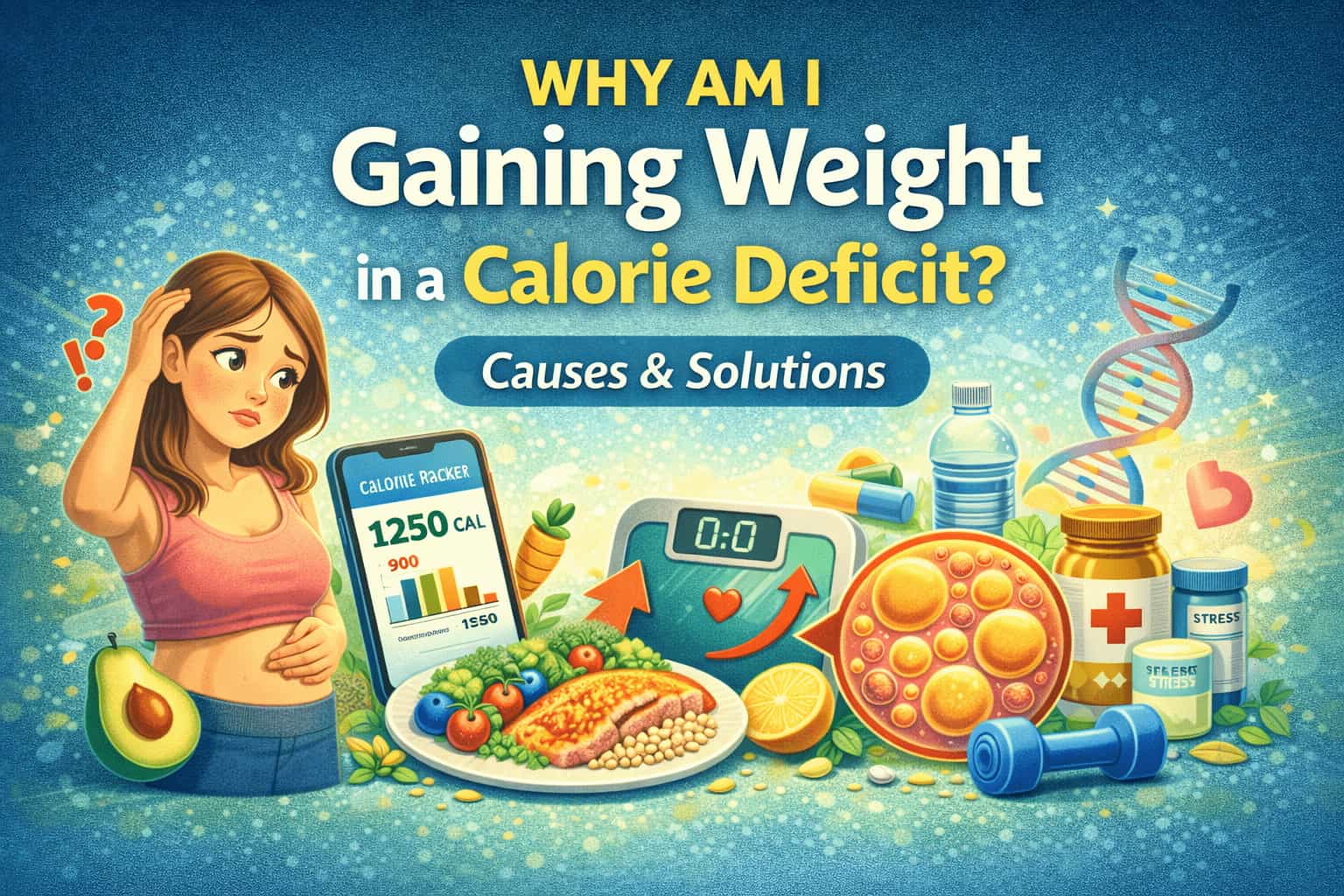
Are you eating less but still gaining weight? Have you been tracking calories religiously only to see the scale move upward? Gaining weight in a calorie deficit feels frustrating and confusing. This complete guide explains the 10 most common reasons why you might gain weight despite eating fewer calories and shows you how accurate tracking with EATAI can help identify the real problem.
Contents
- 1 Understanding Calorie Deficits
- 2 10 Reasons Why You Are Gaining Weight in a Calorie Deficit
- 2.1 1. Inaccurate Calorie Tracking
- 2.2 2. Overestimating Calorie Burn from Exercise
- 2.3 3. Water Retention
- 2.4 4. Hormonal Imbalances
- 2.5 5. Metabolic Adaptation (Adaptive Thermogenesis)
- 2.6 6. Poor Body Composition
- 2.7 7. Lack of Sleep
- 2.8 8. Decreased Non-Exercise Activity (NEAT)
- 2.9 9. Eating Back Exercise Calories
- 2.10 10. Alcohol Consumption
- 3 How to Fix Weight Gain in a Calorie Deficit
- 4 Frequently Asked Questions about Why Am I Gaining Weight in a Calorie Deficit?
- 5 Why am I gaining weight even though I’m in a calorie deficit?
- 6 How long does it take to see weight loss in a calorie deficit?
- 7 Can stress cause weight gain in a calorie deficit?
- 8 Is my metabolism broken if I’m not losing weight?
- 9 Should I eat more to lose weight?
- 10 How do I know if I’m truly in a calorie deficit?
- 11 Can I gain muscle and lose fat at the same time?
- 12 What should I do if nothing is working?
- 13 Conclusion
- 14 References
Understanding Calorie Deficits
A calorie deficit occurs when you consume fewer calories than your body expends. This should cause your body to use stored fat for energy, leading to weight loss. The equation seems simple: eat less than you burn, and you lose weight.
However, weight loss is not as simple as calories in versus calories out. There are other factors that could be causing weight gain despite a calorie deficit. Hormones, stress, sleep, body composition, and tracking accuracy all play important roles in whether you actually lose weight.
10 Reasons Why You Are Gaining Weight in a Calorie Deficit
1. Inaccurate Calorie Tracking
The most common reason people fail to lose weight in a deficit is that they are not actually in a deficit. Studies show that people commonly underestimate their calorie intake by 20-30% or more.
Not counting calories at all can lead to you being in a calorie deficit and not losing weight because it can be easy to underestimate the calorie content of healthy foods. Foods like nuts, nut butters, oils, and even “healthy” options contain more calories than most people realize.
Hidden calories in cooking oils, condiments, beverages, and small bites throughout the day add up quickly. One tablespoon of olive oil contains 120 calories. That “splash” of cream in your coffee might be 50-100 calories. These forgotten calories can eliminate your deficit entirely.
Even when using apps, people often choose incorrect portion sizes or database entries. A “medium” banana in a food database might be 100 calories, but your actual banana could be 150 calories if it is larger.
2. Overestimating Calorie Burn from Exercise
Fitness trackers and smartwatches can have a 10% error when measuring caloric expenditure. Many people rely on these devices and eat back the calories they think they burned, accidentally putting themselves in a surplus.
The type of exercise you are doing may not increase muscle mass. Excessive cardio without strength training can actually lead to muscle loss, which decreases your metabolic rate over time. Adding muscle mass helps improve metabolism and helps the body burn calories more efficiently.
Your level of activity, specifically overestimating the calories burned through exercise, may be another reason why you are not meeting your weight loss goals. A 30-minute walk might burn 150 calories, but your tracker might show 250 calories.
3. Water Retention
Water retention causes temporary weight gain that has nothing to do with fat. Several factors trigger water retention including high sodium intake, hormonal changes, new exercise routines, and carbohydrate consumption.
When you start a new workout routine or increase exercise intensity, your muscles hold extra water for repair. This inflammation response is normal and necessary for muscle recovery. The scale might show a 2-5 pound increase from water alone.
High sodium foods cause your body to retain water to maintain proper fluid balance. Reducing your intake of sodium by consuming less salty foods can help release excess water weight.
Women experience significant water weight fluctuations during their menstrual cycle. Hormonal changes can cause retention of 3-5 pounds of water in the days before menstruation. At the same time, even if you maintain a 1,000-calorie deficit during this time, hormonal changes could cause water retention.
4. Hormonal Imbalances
Hormones control many of the body’s processes, including metabolism. If hormones are not in balance, metabolism might slow down.
Cortisol is commonly known as the stress hormone because it controls your body’s stress response. It also has the job of regulating metabolism, inflammation and immune function, including blood pressure maintenance and blood sugar regulation. When cortisol is released, it raises blood pressure and blood sugar, which in short bouts is okay.
Chronic stress keeps cortisol elevated for extended periods. Prolonged exposure to cortisol leads to Cushing’s syndrome, a hormonal disorder with symptoms including weight gain, a rounder face, and increased fat deposits in the body.
Thyroid hormones directly control metabolism. Hypothyroidism slows calorie burning and often leads to modest weight gain, primarily due to water and salt retention, with most patients gaining about 5-10 pounds depending on the severity of the condition.
PCOS affects hormone balance and makes weight loss difficult. Elevated insulin and androgen levels contribute to insulin resistance and increased fat storage, making it more challenging to lose weight.
5. Metabolic Adaptation (Adaptive Thermogenesis)
When you undereat for too long, your body may respond by slowing your metabolism, making it harder to burn calories and easier to gain weight, even on fewer calories. Research confirms that long-term calorie restriction can lower your resting metabolic rate and make weight loss harder over time.
Adaptive thermogenesis during prolonged energy deficit refers to the greater than expected reduction in energy expenditure independent of concomitant loss of metabolically active body mass. Your body becomes more efficient at functioning on fewer calories, burning less energy for the same activities.
Studies show that a greater extent of adaptive thermogenesis observed within the first week of caloric restriction predicts less weight loss over subsequent weeks. Some people experience stronger metabolic adaptation than others, making weight loss more difficult.
However, recent research suggests metabolic adaptation may not be as significant as previously thought. Studies found that the magnitude of metabolic adaptation following weight loss is not a predictor of weight regain at up to two years follow-up. The average metabolic adaptation accounts to about 120 calories daily with considerable between subject variance.
6. Poor Body Composition
Your body composition may be another reason why you are still gaining weight while in a calorie deficit. If you have a higher body fat percentage and lower muscle mass, then you are probably burning fewer calories than if you had more muscle mass.
Muscle mass increases your metabolism since it takes more energy to build and maintain muscle than it does fat mass. When you lose weight through diet alone without strength training, you lose both fat and muscle. This muscle loss further slows your metabolism.
For a beginner, being in a calorie deficit while working out (both cardio and weight training) will cause fat loss and muscle growth. While fat and muscle weigh the same, the latter tends to occupy less space, which means that you will look smaller while somehow still weighing the same.
This process is called body recomposition, where you work to change your body makeup by shedding fat and gaining muscle at the same time. The scale might show weight gain even though you are losing fat and gaining muscle, which is actually positive progress.
7. Lack of Sleep
Lack of sleep impacts your milk supply and can affect weight loss progress significantly. Poor sleep quality and insufficient sleep increase insulin resistance and affect hormones that regulate hunger and fullness.
When you do not sleep enough, your body produces more ghrelin (the hunger hormone) and less leptin (the fullness hormone). This hormonal imbalance makes you feel hungrier throughout the day and less satisfied after eating.
Research shows that people who sleep less than 7 hours per night are more likely to gain weight over time. Sleep deprivation also increases cortisol levels, which contributes to fat storage especially around the midsection.
Aim for 7-9 hours of quality sleep nightly. Create a relaxing bedtime routine and maintain consistent sleep schedules to support your weight loss efforts.
8. Decreased Non-Exercise Activity (NEAT)
Non-exercise activity thermogenesis (NEAT), such as walking or fidgeting, can decrease unintentionally during a calorie deficit. When you eat less, your body conserves energy by reducing spontaneous movement.
You might stand less, fidget less, take fewer steps during daily activities, and generally move less without realizing it. This unconscious reduction in movement can eliminate 200-400 calories from your daily expenditure.
Losing weight reduces your daily calorie burn because your body needs less energy to maintain a smaller size. A person who weighs 200 pounds burns more calories walking than the same person at 180 pounds doing the same walk.
9. Eating Back Exercise Calories
One common mistake that people make when entering a calorie deficit is consuming the calories they burn through exercise. Your workout might burn 300 calories, but if you eat an extra 300-calorie snack afterward, you eliminate the calorie deficit created by exercise.
Many people unconsciously eat more after working out, either from increased hunger or because they feel they “earned” extra food. This compensation eating can completely negate the calorie deficit from exercise.
Be mindful of post-workout eating. Track both your food intake and exercise to ensure you are not eating back all the calories you burned. Small post-workout snacks are fine, but avoid large meals that eliminate your hard work.
10. Alcohol Consumption
Alcohol is packed full of empty calories—calories that do not offer any nutritional value or benefits. It’s easy to overlook liquid calories, but they do count and can certainly add up.
If you have the habit of drinking a glass of wine or two at the end of the day, or going for cocktails with your friends every weekend, that might just be why you are struggling to lose fat and weight. A glass of wine contains 120-150 calories, while cocktails can contain 200-500 calories each.
Not only can it prevent weight loss, but excessive alcohol consumption can also lead to weight gain, particularly to what is referred to as ‘alcohol belly’. Alcohol also lowers inhibitions and increases appetite, leading to overeating.
How to Fix Weight Gain in a Calorie Deficit
Track Accurately with Modern Technology
The most important step is ensuring you are actually in a calorie deficit. Traditional tracking methods often fail because they require too much time and effort. People give up when tracking becomes burdensome.
EATAI uses artificial intelligence to make calorie tracking effortless and accurate. Instead of manually searching databases, measuring portions, and calculating calories, you simply take a photo of your meal. The AI instantly recognizes the food and calculates:
- Total calories to verify you are truly in a deficit
- Protein, carbohydrates, and fat grams
- Portion sizes with visual recognition
- Complete nutritional breakdown
This automation eliminates the most common tracking errors:
- Forgetting to log cooking oils and condiments
- Choosing incorrect portion sizes
- Missing small bites and tastes throughout the day
- Underestimating serving sizes
EATAI learns your eating patterns over time and improves accuracy with continued use. The app spots trends and helps you identify problem areas. You can see exactly where hidden calories might be sabotaging your deficit.
Visit https://geteatai.app to start tracking with AI-powered photo recognition that removes guesswork from calorie counting.
Reduce Stress and Manage Cortisol
Managing your stress is imperative for weight loss success. Helpful ways to manage stress include exercise, therapy, meditation, journaling, breath work and supplementation.
Practice deep breathing exercises for 5-10 minutes daily. Try meditation apps or guided relaxation sessions. Schedule activities you enjoy to reduce overall stress levels.
Prioritize Sleep Quality
Aim for 7-9 hours of sleep each night. Create a dark, cool sleeping environment. Avoid screens for one hour before bed. Maintain consistent sleep and wake times even on weekends.
Add Strength Training
Focus on strength endurance and max strength training. Ask your dietitian or personal trainer how to achieve these goals. Lifting weights preserves muscle mass during weight loss and increases your metabolic rate.
Incorporate strength training at least 2-3 times weekly. Focus on compound movements like squats, deadlifts, and bench presses. Progressive overload ensures continued muscle development.
Stay Hydrated
Drink water to prevent dehydration. Sometimes thirst masquerades as hunger. Drinking adequate water supports all metabolic processes and helps reduce water retention paradoxically.
Aim for at least 8 glasses (64 ounces) of water daily. Drink more if you exercise intensely or live in hot climates. Keep a water bottle visible as a reminder.
Be Patient with the Scale
Weight loss is not always reflected on the scale due to muscle gain during body recomposition or natural weight fluctuations. Tracking body measurements, energy levels, and how clothes fit can provide a clearer picture of progress.
Weigh yourself only once weekly at the same time under the same conditions. Take progress photos monthly. Track how your clothes fit and your energy levels. These non-scale victories often show progress the scale misses.
Frequently Asked Questions about Why Am I Gaining Weight in a Calorie Deficit?
Why am I gaining weight even though I’m in a calorie deficit?
The most common reason is inaccurate tracking—you may not actually be in a deficit due to underestimating portions, forgetting cooking oils and condiments, or overestimating calorie burn from exercise. Other reasons include water retention from high sodium, new exercise, or hormonal changes, metabolic adaptation from prolonged dieting, stress causing elevated cortisol, poor sleep affecting hunger hormones, or gaining muscle while losing fat (body recomposition).
How long does it take to see weight loss in a calorie deficit?
Most people see initial weight loss within the first 1-2 weeks of a true calorie deficit. However, the first week often shows larger drops due to water weight loss. Sustainable fat loss of 0.5-2 pounds per week typically becomes visible after 3-4 weeks. If you see no changes after 3-4 weeks despite accurate tracking, you may need to adjust your deficit or investigate other factors like hormonal issues.
Can stress cause weight gain in a calorie deficit?
Yes, chronic stress can cause weight gain even in a calorie deficit. Stress elevates cortisol levels, which promotes fat storage especially around the abdomen, increases appetite and cravings for high-calorie foods, and can slow metabolism. Prolonged high cortisol leads to Cushing’s syndrome, which causes weight gain. Managing stress through exercise, meditation, adequate sleep, and relaxation techniques is essential for weight loss success.
Is my metabolism broken if I’m not losing weight?
Your metabolism is not “broken,” but it may have adapted to lower calorie intake. Metabolic adaptation (adaptive thermogenesis) can reduce your calorie burn by about 120 calories daily on average. However, research shows this is not a major barrier to weight loss. The more likely culprits are tracking inaccuracies, decreased daily movement (NEAT), muscle loss from inadequate protein or strength training, or hormonal issues like thyroid problems or PCOS.
Should I eat more to lose weight?
If you have been severely restricting calories for an extended period, temporarily increasing calories to maintenance levels for 1-2 weeks can help reverse metabolic adaptation. This “diet break” can restore hormone levels and improve adherence. However, you will not lose weight while eating at maintenance. After the break, resume a moderate deficit of 300-500 calories. Extreme calorie restriction (below 1,200 for women or 1,500 for men) often backfires.
How do I know if I’m truly in a calorie deficit?
Use an AI-powered app like EATAI to track everything you eat and drink accurately for 2-3 weeks. Weigh yourself weekly under consistent conditions. If the scale does not move after 3 weeks of consistent tracking, you are not in a deficit. Recalculate your calorie needs using a TDEE calculator and create a 300-500 calorie deficit. Track non-exercise movement with a pedometer. Be honest about portion sizes and include all cooking oils, condiments, and beverages.
Can I gain muscle and lose fat at the same time?
Yes, beginners and people returning to training after a break can achieve body recomposition—gaining muscle while losing fat simultaneously. This requires eating adequate protein (1.6-2.2 grams per kilogram of body weight), maintaining a modest calorie deficit (200-400 calories below maintenance), and performing regular strength training. The scale may not change or might even increase slightly because muscle is denser than fat. Track progress through body measurements, progress photos, and how clothes fit rather than relying solely on scale weight.
What should I do if nothing is working?
If you have accurately tracked calories for 4-6 weeks without weight loss, consult a healthcare provider. Request blood tests for thyroid function (TSH, T3, T4), cortisol levels, fasting glucose and insulin, and sex hormones if applicable. Rule out conditions like hypothyroidism, PCOS, Cushing’s syndrome, or insulin resistance. Consider working with a registered dietitian who can review your food logs, assess your metabolism, and create a personalized plan. Some people need medical intervention before diet and exercise alone can work effectively.
Conclusion
Gaining weight in a calorie deficit frustrates and confuses many people, but understanding the reasons empowers you to fix the problem. The most common culprit is inaccurate tracking—you may not be in a true deficit due to underestimated portions, forgotten ingredients, or overestimated exercise burn.
Other factors include water retention from sodium or hormones, metabolic adaptation from prolonged dieting, stress-induced cortisol elevation, poor sleep quality, muscle gain from strength training, decreased daily movement, and hidden calories from alcohol or eating back exercise calories.
The solution starts with accurate tracking. Traditional methods fail because they require too much time and effort. EATAI eliminates tracking errors through AI-powered photo recognition that instantly calculates calories, macros, and portions. Visit https://geteatai.app to start tracking accurately and identify exactly where your deficit is going wrong.
Combine accurate tracking with stress management, quality sleep, strength training, and patience. Weight loss is not linear—the scale fluctuates daily from water, digestion, and hormones. Track weekly averages and non-scale victories like measurements, energy levels, and how clothes fit.
If problems persist despite accurate tracking and lifestyle changes, consult a healthcare provider. Medical conditions like thyroid disorders, PCOS, or hormonal imbalances require professional treatment. Blood tests can identify issues that diet and exercise alone cannot fix.
Remember that sustainable weight loss happens gradually. Focus on creating healthy habits you can maintain long-term rather than pursuing rapid results through extreme restriction. With accurate tracking, patience, and consistency, you can break through plateaus and achieve your goals.
References
- Benton, D., & Young, H. A. (2017). Reducing Calorie Intake May Not Help You Lose Body Weight. Perspectives on Psychological Science, 12(5), 703-714. https://pmc.ncbi.nlm.nih.gov/articles/PMC5639963/
- Anderson’s Nutrition. (2024). Reasons You are Gaining Weight Even in a Calorie Deficit. Retrieved from https://andersonsnutrition.com/the-nutrition-hub/weight-loss/reasons-you-are-gaining-weight-in-a-calorie-deficit/
- Nutrisense. (n.d.). Why You’re Not Losing Weight: Undereating and Weight Gain. Retrieved from https://www.nutrisense.io/blog/can-undereating-cause-weight-gain
- Season Health. (2025). In a Calorie Deficit but Not Losing Weight? Experts Explain Why. Retrieved from https://www.seasonhealth.com/blog/calorie-deficit-not-losing-weight-explained
- My Juniper. (2025). Not Losing Weight in a Calorie Deficit? 12 Reasons Why. Retrieved from https://www.myjuniper.com/blog/why-am-i-not-losing-weight-in-a-calorie-deficit
- Müller, M. J., & Bosy-Westphal, A. (2013). Adaptive thermogenesis with weight loss in humans. Obesity, 21(2), 218-228. https://pubmed.ncbi.nlm.nih.gov/23404923/
- Martins, C., Gower, B. A., Hill, J. O., & Hunter, G. R. (2020). Metabolic adaptation is not a major barrier to weight-loss maintenance. The American Journal of Clinical Nutrition, 112(3), 558-565.
- Heinitz, S., Hollstein, T., Ando, T., et al. (2020). Early Adaptive Thermogenesis Is a Determinant of Weight Loss after Six Weeks of Caloric Restriction. Nutrients, 12(9), 2562. https://pmc.ncbi.nlm.nih.gov/articles/PMC7484122/